


Quick answer: We’ve run the SpringWell CF1 on city water since August 2022. The sediment filter needs replacing around month 8. The carbon tank has never needed attention. Annual cost has stayed around $40. That is what real ownership looks like on a properly matched city-water system.
Manufacturer timelines are a starting point, not the full story. A filter that runs clean for months in one home can load up fast in another depending on water quality, sediment burden, and how hard the house uses water. The right schedule is built around what your house actually does to the system.
What this guide covers:
- What whole house filter maintenance actually includes
- A simple maintenance schedule by task — with our real CF1 data
- How upkeep changes with tank vs cartridge systems
- What maintenance really costs over 1, 5, and 10 years
- Signs a whole house filter is fading before it fully fails
- How city water and well water change the schedule
- Which of our top picks are easiest to live with long term
🔧 What Whole House Filter Maintenance Actually Includes
Whole house maintenance is not just “change the filter.” Different systems have different upkeep points, and that is where a lot of buyers get misled.
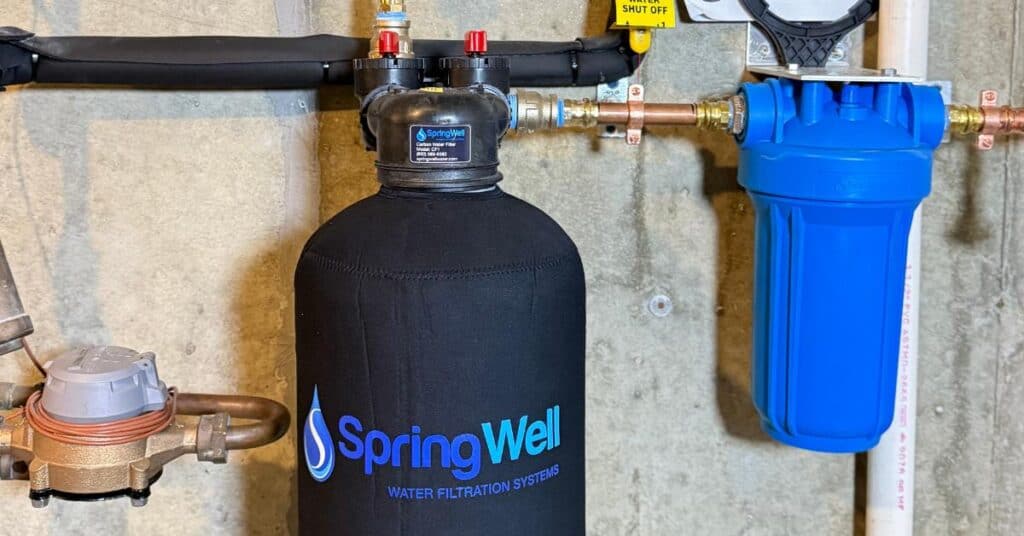
A basic cartridge setup usually means checking sediment loading, replacing cartridges on time, cleaning housings, and watching for flow loss as the media ages. Tank systems on city water are usually the lowest-maintenance format, but the sediment prefilter still does real work. It catches the debris before it reaches the carbon bed, which is why neglecting it is the most common way a low-maintenance system stops being low-maintenance.
Well water changes that equation. Sediment, iron, sulfur, and manganese hit the pre-stages harder and earlier. The same filter that runs quietly for eight months on city water might need attention at four on a well.
The big categories are:
- Sediment filter replacement
- Cartridge swaps
- Tank media lifespan
- Pressure and flow checks
- Leak inspection at housings, heads, and fittings
- Occasional water testing to confirm performance
That is the real maintenance picture. The system itself may be “whole house,” but the upkeep always comes down to a few specific wear points.
📅 Simple Whole House Water Filter Maintenance Schedule

This is the easiest way to think about it: not by brand first, but by task. The fifth column reflects what we actually observed on the SpringWell CF1 over three years of city-water use.
Swipe to view the full maintenance schedule and real CF1 ownership data.
| 🛠 Maintenance Task | ⏱ Typical Window | 👀 What to Watch For | 💡 Why It Matters | 📋 What We Saw (CF1, City Water) |
|---|---|---|---|---|
| Sediment prefilter check | Monthly visual check | Dark discoloration, visible loading, reduced flow | Protects the main filter stage from early restriction | Consistently loaded by month 7–8. Brown discoloration, slight pressure softening. |
| Sediment filter replacement | ~3–9 months | Pressure softening, dirt loading, visible debris | Keeps flow stable and prevents downstream clogging | Replaced every ~8–9 months. About $20 per swap. Pressure restored right after. |
| Carbon cartridges / tank media | ~6–12 months (cartridge) / years (tank) | Return of chlorine smell, taste shift, flow loss | Restores contaminant reduction and shower comfort | No performance fade. Tap Score at 3 years still showed THMs at non-detect. No replacement needed. |
| Housing / fitting inspection | Every 3–6 months | Moisture, drips, loose connections, stress on fittings | Catches leaks before they become a bigger plumbing problem | No leaks in 3+ years. Fittings checked seasonally. |
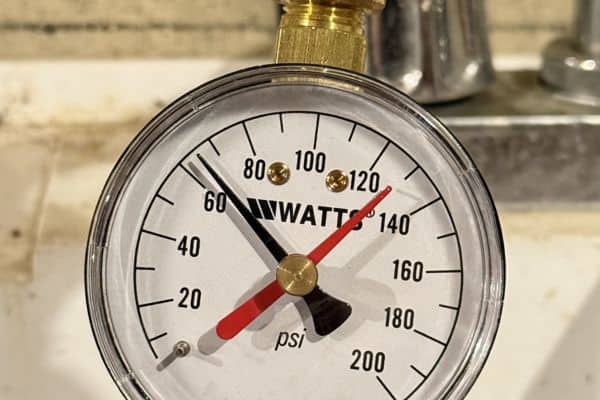
| Pressure / flow check | Every 6–12 months | Weaker shower feel, slower refill, lower performance at overlap | Helps separate a dirty filter from a bigger system issue | 68 PSI at install. 65 PSI after 3 years. Only dip came near the end of the sediment cycle and disappeared after a swap. |
| Water retesting | About yearly or after major changes | Returning odor, taste, staining, or contaminant concern | Confirms the system is still doing what you bought it for | Ran Tap Score Advanced City Water in 2022 and again in 2025. THMs dropped from 31.83 ppb to non-detect, confirming the carbon stage was still performing at 3 years. |
| Tank media replacement | Usually years, not months | Performance fade, age, or end-of-life media schedule | Determines the real long-term ownership cost of tank systems | Not yet required. The CF1 carbon tank has not needed service after 3+ years on city water. |
Takeaway: The main thing most homeowners stay on top of is the sediment stage. That is usually the first maintenance checkpoint and the easiest place to catch problems early.
🧪 Real Maintenance Timelines by System Type

The biggest mistake people make is assuming all whole house filters age the same way. They do not.
A large media tank on city water can be extremely low-touch once installed, especially if the incoming water is relatively clean and the prefilter is changed on time. A multi-cartridge system may look cheaper at checkout, but it asks for more regular attention and tends to punish neglect faster. A well-water setup adds even more variability because water burden can shift the schedule far earlier than the label suggests.
Tank-Based City-Water Systems
These are usually the lowest-maintenance option in day-to-day ownership. The main work is staying ahead of the sediment stage and replacing the media bed at the end of its useful life. If the sediment filter is protected and swapped on time, the main tank can run quietly in the background for years.
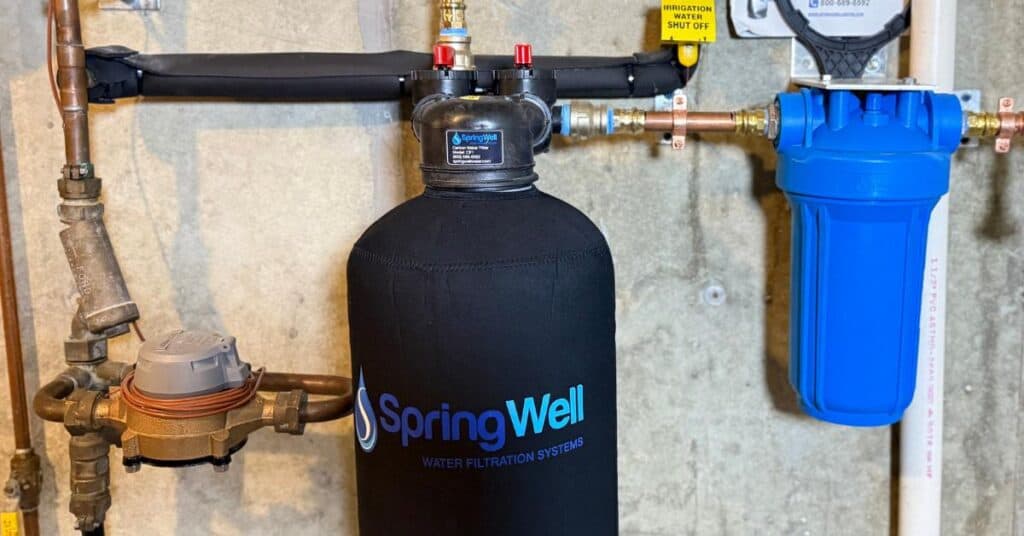
In our own setup, the CF1 has run quietly since 2022 with one task: replacing the sediment prefilter. We track the date on the housing. By month 7 or 8 it is visibly loaded and pressure softens slightly. A $20 swap restores everything immediately. The carbon tank itself has not required any service in over three years.
Cartridge-Based City-Water Systems
These demand more frequent interaction. Cartridges do the heavy lifting directly, which means they are more exposed to loading, more sensitive to poor timing, and more likely to show performance loss gradually if you keep pushing them.
If you want the deeper breakdown on cartridge upkeep, service intervals, and housing size tradeoffs, see our guide to whole house filter cartridge types.
Well-Water Systems
Well-water systems are not just dealing with household demand. They are also dealing with the water itself. Sediment, iron, sulfur, and manganese load the pre-stages faster, shorten service intervals, and make undersizing show up sooner than it would on city water. A maintenance schedule built around city water will not hold on a well. The incoming burden is too different.
For that side of the category, see our guide to whole house water filters for well water.
Backwashing Systems
These avoid some of the disposable-filter churn, but they bring their own maintenance reality: drain lines, control heads, settings, occasional inspections, and longer-term media considerations.
If you are comparing formats, our guide to whole house water filter backwash explains where these systems differ from standard cartridge and carbon-tank setups.
The maintenance schedule is not just a brand issue. It is a format issue and a water-burden issue.
💸 What Whole House Filter Maintenance Really Costs Over Time

This is where the ownership story usually changes.
A cartridge system can look affordable at checkout, then quietly cost more over five years than a larger tank system with a higher sticker price. That is why maintenance cost belongs in the buying decision, not just the post-purchase phase.
Swipe to compare maintenance cost and upkeep by system.
| 🏷 System | 💲 Annual Upkeep | 📅 5-Year Cost | 🗓 10-Year Cost | 🧰 Main Maintenance Burden |
|---|---|---|---|---|
| SpringWell CF1 | ~$40 | ~$200 | ~$400 + future media replacement window | Sediment prefilter swaps |
| Kind E-1000 | ~$150–$200 | ~$750–$1,000 | ~$1,500–$2,000 | Carbon cartridge replacement |
| Aquasana EQ-1000 | ~$120 | ~$600 | ~$1,200 + media/end-of-life servicing | Pre/post filter changes |
| iSpring WGB32B | ~$150–$225 | ~$750–$1,125 | ~$1,500–$2,250 | Multi-stage cartridge replacements |
| SpringWell WS | Low routine spend, depends on setup | Mostly pre-stage / service checks | Media and component lifecycle matter more than monthly spend | Well-water burden and system configuration |
The $40/year figure on the CF1 is not an estimate. It reflects our actual spending over three years of ownership — one sediment filter swap per year at approximately $20 per swap. The carbon media has not needed replacement.
The lesson here is simple: a lower upfront price does not always mean a cheaper system to own. A lot of the long-term difference comes from how often the house asks you to buy something new and how much filter burden lands on replaceable stages.
🚿 Signs It’s Time to Replace Something
Most whole house systems do not fail dramatically. They fade. And that is why people miss the signs.
The first warning is often not the water itself — it is the way the house starts to feel. A shower loses some of its strength. A sink refill feels a little slower. The washing machine takes the edge off a shower when it did not before. Then you notice a filter housing looks dirtier than usual, or the chlorine smell you forgot about starts creeping back in.
The most common warning signs are:
- Weaker shower performance during overlap
- Returning chlorine or chemical odor
- Shorter cartridge life than expected
- Visibly dark or loaded sediment stages
- Taste or odor changes at the tap
- Staining, haze, or nuisance issues returning
- More frequent need for service than the original schedule suggested
One thing worth flagging from our own testing: our 2025 Tap Score results showed a trace lead detection of 0.5 ppb — about 30 times below the EPA action level. After investigation, we traced it to a failing kitchen faucet with corroded braided supply lines, not the filter system. We replaced the faucet.
This matters because whole house filters often get blamed for contaminants that are entering downstream of the filter — at fixtures, at faucets, or through aging supply lines. If your water test shows something unexpected, the filter is not always the source. Test at multiple points before assuming the system failed.
Swipe to compare common symptoms, likely causes, and what to check first.
| 🚨 Symptom | 🔍 Likely Cause | 🛠 What to Check First |
|---|---|---|
| Weaker shower flow | Loaded sediment stage or restrictive cartridge | Sediment filter condition and recent change interval |
| Chlorine smell returning | Carbon stage nearing end of life | Carbon replacement schedule and household usage |
| Filter getting dirty unusually fast | Heavier sediment burden than expected | Source water, prefilter stage, housing condition |
| Pressure fine alone, weak during overlap | System too close to demand ceiling | Flow path, filter loading, and headroom |
| Water tastes or smells “off” again | Exhausted media or overdue replacement | Filter age, contaminant target, recent usage pattern |
| Unexpected contaminant in water test | May not be the filter — check downstream fixtures first | Test at multiple points, including faucet aerators and supply lines |
Take note: by the time a system feels obviously wrong, it has usually been getting weaker for a while.
🧱 Tank vs Cartridge Maintenance: The Real Difference
This is where ownership stops looking equal.
Tank systems usually win on low-touch ownership. Once installed, they tend to ask for less constant attention. The sediment stage still matters, but the main media bed is not something you are opening up and changing every few months. That is one reason tank systems are easier to live with in homes that want strong whole-home flow without constant babysitting.
Our CF1 is the clearest example of this. Three years in, the carbon tank has never needed service. The only recurring task is the sediment prefilter. That is what low-touch tank ownership actually looks like when the system is matched to city water and the sediment stage is doing its job.
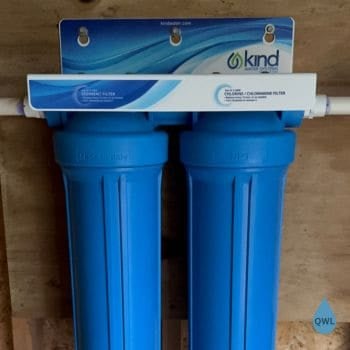
Cartridge systems are more hands-on by design. They can absolutely be the right choice for smaller homes, wall-mount setups, or lower upfront budgets. But they put more of the burden into replaceable parts. That means the maintenance cycle stays closer to the homeowner and gets more expensive faster if the house has heavier overlap or dirtier source water.
Neither format is inherently wrong. They just create very different ownership rhythms.
In plain English: tank systems usually age quietly. Cartridge systems usually remind you they exist more often.
🌊 City Water vs Well Water Maintenance
City water and well water do not just change what a system needs to remove. They also change how fast maintenance becomes part of ownership.
Municipal water is often more predictable. You are usually managing chlorine, chloramine, taste, odor, and general household protection. Maintenance can still vary, but the incoming burden is often more stable.
Well water is a different maintenance conversation. Sediment, iron, sulfur, manganese, and particulate load can push service intervals forward, dirty stages faster, and expose weak points in the setup more aggressively. Two systems with the same nominal flow can behave very differently if one is seeing much heavier filter burden.
That is why a maintenance schedule for well water should never be copied from a clean city-water setup without adjustment. The source may look similar at the plumbing line, but the stress on the system is not the same.
For well owners specifically, a baseline water test before choosing a system is not optional — it is the only way to know what your maintenance schedule will actually look like. See our well water filter guide for more on matching treatment to what your well is actually producing.
🏆 Which of Our Top Picks Is Easiest to Live With?

When maintenance is the deciding factor, the systems separate pretty quickly.
SpringWell CF1 is the easiest of the group to live with if your goal is low-touch city-water ownership. The routine is simple, the annual spend stays low, and the system is not asking you to swap expensive carbon stages every year. After three years, our total maintenance spend has been under $100.
Kind E-1000 makes more sense for buyers who want a compact wall-mounted setup and can accept more hands-on upkeep in exchange for a lower entry price.
Aquasana EQ-1000 sits in the middle. It gives you scale-control value and strong all-around city-water appeal, but the pre/post maintenance pattern matters more than many buyers expect.
iSpring WGB32B works best when budget matters more than long-term filter spend. It is easier to buy into, but not always the cheapest to keep running.
SpringWell WS is the right fit when your water problem is tougher than chlorine or taste issues and the burden on the system is coming from the source itself.
If low upkeep is the priority, bigger media systems usually hold the advantage. If compact footprint or lower entry price matters more, cartridge platforms can still make sense — you just want to go in with open eyes.
✅ The Bottom Line on Maintenance
The right whole house maintenance schedule is not built around brand marketing. It is built around what your water, your plumbing, and your household demand actually do to the system over time.
Sediment stages deserve more attention than most buyers expect. Cartridge systems usually cost more in ongoing labor and replacement. Tank systems usually win on low-touch ownership. And well water changes the maintenance burden more than most generic schedules admit.
Our own three-year experience on the SpringWell CF1 puts real numbers on it: $40/year in maintenance, sediment filter consistently at month 8, pressure holding at 65 PSI versus 68 at install, and carbon media still confirmed working by independent Tap Score lab testing at the 3-year mark. That is the honest picture of what properly matched whole-house filtration looks like in daily use.
If you care about the real cost of owning a whole house filter, this is the part you should not skip. For the bigger product breakdown, see our roundup of the whole house water filtration systems.
❓FAQ
It depends on the system type and the source water. Sediment stages often need the earliest attention — in our own CF1 setup, consistently around month 8. Larger media tanks may run for years with only prefilter service in between.
For most setups, it is checking and replacing the sediment stage before it loads up enough to start restricting flow.
The first signs are often weaker flow during overlap, visible sediment loading, or taste and odor changes returning after a long stable period.
Usually yes. Tank systems are typically lower-touch once installed, while cartridge systems bring more frequent replacement cycles and more direct upkeep. Our CF1 has needed only sediment filter swaps in three years of use.
In many homes, yes. Sediment, iron, sulfur, and manganese can shorten service intervals and make filters feel weaker faster.
Replacement frequency. The more often a system asks you for new cartridges or filter stages, the faster ownership cost climbs.
Most manufacturers rate large carbon tanks at 10 years or 1 million gallons. In our own testing, the SpringWell CF1 carbon media was still performing at full capacity after 3 years — confirmed by independent Tap Score lab testing showing total THMs at non-detect, identical to the post-install result. Media life on a well-maintained city-water system can be significantly longer than the minimum rating suggests.
Don’t assume the filter failed. In our own 2025 Tap Score testing, we found a trace lead detection of 0.5 ppb that turned out to be a failing kitchen faucet — not the filter. Test at multiple points in the house before drawing conclusions about system performance.