


We narrowed the field to four countertop systems that stood out in both lab results and daily use. Each one represents a different approach — reverse osmosis, stainless gravity, large-volume carbon, and a premium glass dispenser — so you can weigh speed, upkeep, and water quality against your budget.
🔎 Expert Picks:
- Best Overall: AquaTru Classic
- Best for Preppers: Glacier Fresh 3-Gallon Gravity
- Budget-Friendly: Epic Pure Dispenser
- Best Premium Glass: ZeroWater 40-Cup Glass Dispenser
Each of these countertop filters offers unique strengths and trade-offs, making it easier to match performance, aesthetics, and budget with your household’s needs.
📊 How We Test & Score
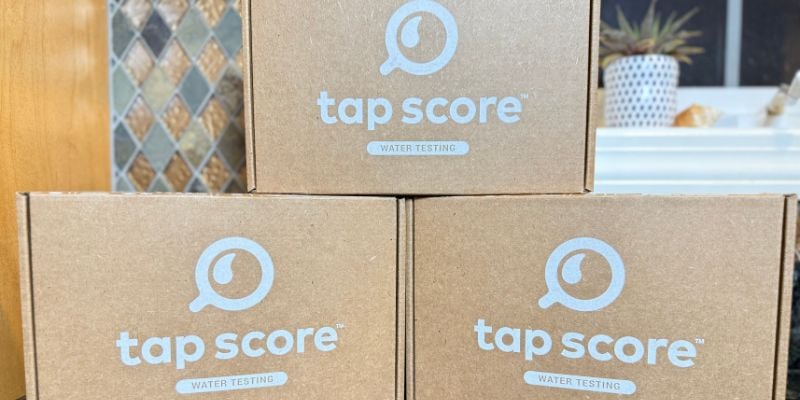
Every filter we review—when possible—goes through Tap Score lab testing and real-world use. Because a countertop RO, gravity tank, and dispenser behave differently, we score each category with its own weighting.
- Countertop: portability, space efficiency, and per-gallon cost.
- Countertop RO: efficiency, waste ratio, and broad contaminant removal.
- Pitchers & Dispensers: taste, chlorine byproducts, metals, and filter life.
👉 See the full scoring framework for detailed weights and examples.
📝 How We Chose
These weren’t one-week trial runs. We’ve used most of these countertop systems ourselves — the AquaTru has been cycled through multiple rounds of Tap Score testing, Epic’s dispenser sees daily family use, and the Glacier Fresh has lived on our counter for long-term evaluation. ZeroWater’s glass unit rounds things out with NSF/ANSI certifications and published third-party performance data. In short, we looked beyond spec sheets and into how they perform day to day.
- Does it noticeably improve taste?
- How easy is setup, filling, and swapping filters?
- What’s the real cost per year to keep it running?
- Is there independent proof (NSF/ANSI certifications or Tap Score lab data when possible)?
Plenty of models didn’t make the cut because they couldn’t keep up. The four we did pick each earned their place by excelling where it matters most — whether that’s lab-verified contaminant removal, ease of use, or value over time.
#1. AquaTru Classic
- Filtration (RO) 45% 5/5
- Flow/Pressure 20% 4.5/5
Full scoring basis
- Filtration (RO) (45%): Score: 5/5 — 4-stage RO with carbon + membrane; Tap Score verified PFAS, THMs, and fluoride removal.
- Flow/Pressure (20%): Score: 4.5/5 — Countertop flow steady at ~16 min per cycle; 3-quart reservoir fits small households.
- Install/Maint (10%): Score: 5/5 — Plug-and-play; filters swap in minutes; upkeep averages ~$100 per year.
- Build (10%): Score: 4.5/5 — Solid BPA/BPS-free Tritan reservoirs; NSF-certified components.
- Taste (5%) — Score: 5/5
- Cost (5%) — Score: 4.5/5
- Certs (5%) — Score: 5/5
- Overall: 4.8/5 — weighted average of the factors above
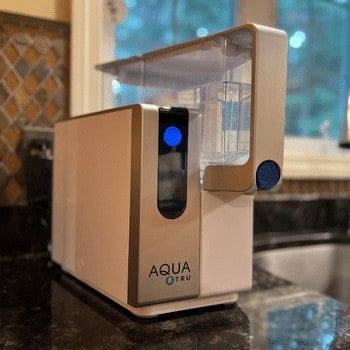
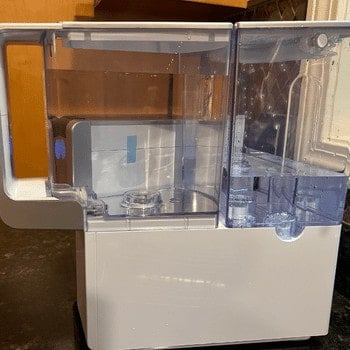
AquaTru Countertop RO — a plug-and-play reverse osmosis system that strips out contaminants most pitchers and faucet filters can’t touch. In Tap Score testing, it cut PFAS, microplastics, and THMs down to non-detectable levels.
Compared to gravity filters like Glacier Fresh, it’s faster and more thorough, and pouring feels like a regular carafe — though the trade-off is higher upfront cost and periodic filter swaps.
What we like
- Perfect for renters — no plumbing, no drilling, totally portable.
- 4:1 efficiency ratio wastes less water than most countertop RO units.
- Lets you pour filtered water while it’s still purifying, a small but handy convenience.
- Annual upkeep is ~$100, making it cheaper long-term than bottled or under-sink RO.
What we don’t
- Filtering a full tank took 15:53 in our timed test — patience required.
- All-plastic reservoir feels less premium than glass or stainless options.
Best for: Renters and families who want plug-and-play RO protection against PFAS, microplastics, and other tough contaminants without a full under-sink install.
🧪 Independent Lab Testing
In addition to AquaTru’s published NSF/ANSI certifications, we partnered with Tap Score to verify real-world performance across two panels: PFAS and Microplastics.
PFAS (Per- and Polyfluoroalkyl Substances)
Tap Score Lab Results — AquaTru Classic Countertop RO (PFAS Panel)
| PFAS Analyte | Before (City Tap) | After AquaTru RO | Change |
|---|---|---|---|
| PFOA | Detected trace | ND Removed | −100% |
| PFOS | Detected trace | ND Removed | −100% |
| PFHxS | Detected trace | ND Removed | −100% |
| PFNA | Detected trace | ND Removed | −100% |
| Other PFAS (9 additional) | Detected trace | ND Removed | −100% |
“ND” = Not Detected above Tap Score reporting limits (0.00058–0.00099 µg/L depending on analyte). All 14 PFAS analytes in the panel were Not Detected after treatment.
Pre-test (City Tap, baseline):
View baseline lab report
Post-test (AquaTru Classic, new filters):
View PFAS lab report
Microplastics
Tap Score Lab Results — Microplastics (Baseline vs. 2025 Post-Install)
| Size Range | Before | After | Change |
|---|---|---|---|
| 1000–5000 µm | Not measured (2022) | ND Not Detected | −100% |
| 500–1000 µm | Not measured (2022) | ND Not Detected | −100% |
| 100–500 µm | Not measured (2022) | ND Not Detected | −100% |
| 50–100 µm | Not measured (2022) | 0.0147 count/mL At RL | Trace |
| 10–50 µm | Not measured (2022) | ND Not Detected | −100% |
| <10 µm | Not measured (2022) | ND Not Detected | −100% |
“ND” = Not Detected above Tap Score reporting limits. One trace particle (50–100 µm) recorded near reporting limit; all other ranges were Not Detected.
Post-test (AquaTru Classic, new filters): View microplastics lab report (PDF)
🧾 How It Scored
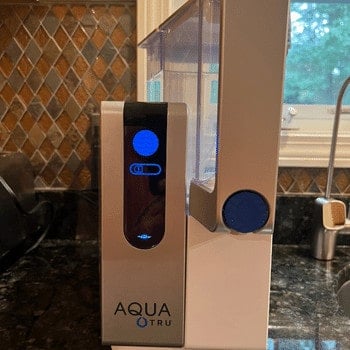
Using the AquaTru day to day feels closer to a water jug than a filter. A full tank takes 15:53 to process, but you can pour mid-cycle without interruption. The carafe handle is sturdy and balanced, and cartridge swaps are no-tools jobs that click into place with a snap — no leaks, no drips.
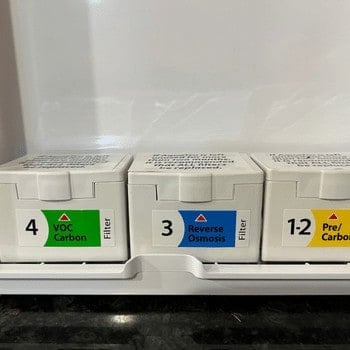
Filters last 6 months (sediment/carbon) and 2 years (RO/VOC), with upkeep averaging about $100 a year (~$0.20–$0.25/gal). Multi-packs bring costs down further, and AquaTru’s 4:1 efficiency ratio wastes far less water than older countertop RO systems.
On performance, it’s one of the few countertop units with lab-verified removal of PFAS, THMs, and microplastics to non-detectable levels in Tap Score testing. Those results align with its deep stack of NSF/ANSI certifications (42, 53, 58, 401, 372) — covering chlorine, lead, VOCs, and “forever chemicals.”
👉 Bottom line: AquaTru balances lab-proven protection and everyday usability, making it a standout for renters and families who want true RO without a permanent install.
Read full review: Aquatru Review
#2. Glacier Fresh Gravity Filter
- Filtration Performance 45% 4/5
- Flow / Capacity 20% 3.5/5
Full scoring basis
- Filtration Performance (45%): Score: 4/5 — Carbon + optional fluoride filters cut chlorine ~98%. NSF/ANSI 42 verified; adds fluoride, VOC, and metals coverage.
- Flow / Capacity (20%): Score: 3.5/5 — 3-gallon tank filters in ~40–60 minutes; adequate for ~3 gallons/day family use.
- Install & Maintenance (10%): Score: 4/5 — Tool-free gravity setup; filter swaps in minutes; upkeep runs ~$50–$85 yearly.
- Build Quality (10%): Score: 4/5 — 304 stainless housing with spigot; lid/seals need careful seating to prevent drips.
- Operating Cost (5%) — Score: 5/5
- Transparency (5%) — Score: 4/5
- Long-Term Value (5%) — Score: 4/5
- Overall: 4/5 — weighted average of the factors above
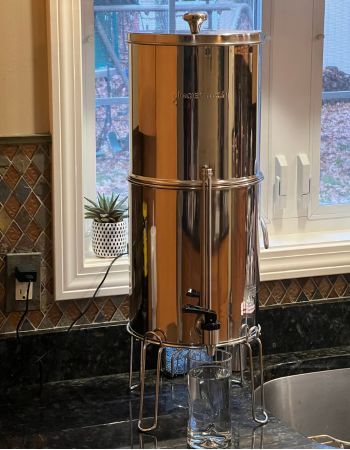
Glacier Fresh Gravity System — a stainless countertop alternative to Berkey that delivers certified chlorine reduction at a fraction of the price.
In NSF/ANSI 42 testing, it cut chlorine taste and odor by 97.9%. Compared to premium gravity systems like ProOne, it’s cheaper and certified, though flow speed is still at the mercy of gravity.
What we like
- NSF/ANSI 42 certified for chlorine reduction (97.9%)
- Solid stainless build, holds up to daily use
- Lower-cost alternative to premium gravity systems like Berkey
What we don’t
- Gravity pace is slow compared to pitchers or dispensers
- Spigot/O-ring seal can drip if not firmly seated
Best for: Households that want a simple, non-electric backup water source for daily or emergency use.
| System | Upfront Cost | Filter Life | Est. Annual Cost |
|---|---|---|---|
| Glacier Fresh | $229.99 (includes 6 filters) | Carbon up to 3,000 gal Fluoride up to 1,000 gal |
~$50–$85/yr |
| Berkey Big | $387 (2 Black elements) | Up to ~6,000 gal (pair) | ~$30–$60/yr |
| ProOne Big+ | $279 (2 elements) | Up to ~2,400 gal (pair) | ~$90–$110/yr |
*Estimates assume family use of ~3 gallons/day (≈1,095 gal/yr). Annual cost reflects typical replacement schedules after the first year. Real-world life varies with source water and whether fluoride filters are used continuously.
🧾 How It Scored
Performance: In NSF/ANSI 42 testing, Glacier Fresh filters cut chlorine taste and odor by nearly 98%. It doesn’t cover the full contaminant range of an AquaTru or Epic, but for a gravity-fed budget system, it delivers a verified baseline that most off-brand units can’t match.
Daily Use: This is a “fill and wait” system — expect to wait about 42 mins for a full reservoir. The 2.25-gallon stainless tank is enough to cover a family’s daily drinking water, and the build feels solid on the counter. The only quirk is the spigot seal, which needs to be tightened carefully to avoid drips when full.
Costs & Longevity: Each filter pair is rated for 3,000 gallons. At ~4 gallons per day for a family of four, that’s a little over 2 years of use per set. A 3-pack ($50) covers ~3 years, bringing the annual operating cost down to about $16 — roughly half a cent per gallon, making it one of the lowest-cost countertop options to maintain.
👉 Bottom line: Glacier Fresh isn’t fast, but it’s durable, inexpensive to run, and big enough for families who want a low-maintenance gravity filter without paying Berkey prices.
Read full review: Glacier Fresh Gravity Filter
#3. Epic Pure Water Dispenser
- Filtration 40% 4.5/5
- Taste & Odor 20% 4/5
Full scoring basis
- Filtration (40%): Score: 4.5/5 — NSF/ANSI tested across 200+ contaminants; Tap Score confirmed THMs and lead to ND.
- Taste & Odor (20%): Score: 4/5 — Crisp, clean taste; chlorine and chemical notes removed.
- Value (15%): Score: 3.5/5 — 150-gallon lifespan; ~$100–$150 yearly, about $0.33 per gallon.
- Build Quality (15%): Score: 4/5 — Durable BPA-free plastic; digital timer handy though lid fit is loose.
- Ease of Use (10%): Score: 4.5/5 — 1.7-gallon dispenser is easy to tap without lifting; quick cartridge swaps.
- Taste (5%) — Score: 4/5
- Cost (5%) — Score: 3.5/5
- Certs (5%) — Score: 4.5/5
- Overall: 4.2/5 — weighted average of the factors above
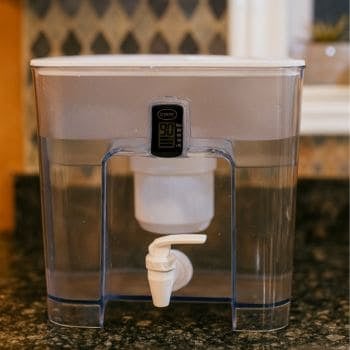
Epic Pure Dispenser — a family-sized upgrade of Epic’s pitcher, built for households that go through gallons a day. In Tap Score testing, it wiped out chlorine byproducts and kept heavy metals like lead and arsenic at zero.
Compared to ZeroWater, it won’t hit 0 TDS, but it tastes cleaner and the filters last longer — a more practical pick for daily use.
What we like
- Independent lab data backs strong reduction of THMs and heavy metals
- 2.25-gallon size means fewer refills than a pitcher — good for families
- Spigot is smooth and convenient, no need to lift a heavy jug
- About 23 minutes to filter a full cycle — quicker than many gravity units
What we don’t
- Lid doesn’t seal tight, so water can slosh if tilted when moving from the sink
- Spigot may drip if the O-ring isn’t snugly seated (easy to miss on first setup)
- Bulky footprint compared to a pitcher, needs counter or fridge space
Best for: Families and high-volume drinkers who want pitcher-level protection without constant refills — a practical middle ground between a small jug and a large gravity system.
🔬 Tap Score Lab Results — Epic
| Parameter | Before | After | Change |
|---|---|---|---|
| Total THMs iEPA MCL: 80 ppb | 31.83 ppb | NDRemoved | −100% |
| Chloroform (THM) | 21.57 ppb | NDRemoved | −100% |
| Bromodichloromethane | 7.93 ppb | NDRemoved | −100% |
| Dibromochloromethane | 2.33 ppb | NDRemoved | −100% |
| Lead iEPA Action Level: 15 ppb | 0.50 ppb | NDRemoved | −100% |
| Fluoride | 0.70 ppm | NDRemoved | −100% |
| Barium iEPA MCL: 2 ppm | 0.010 ppm | 0.033 ppm | +230% |
| Total Dissolved Solids (TDS) | 187 ppm | 289 ppm | +55% |
Context & Methods
“ND” = Not Detected above the lab reporting limit. THMs compared to EPA MCL (80 ppb). Lead compared to EPA action level (15 ppb). Barium compared to EPA MCL (2 ppm). Sampling protocol: Epic Pure pitcher tested with Tap Score Advanced City Water panel.
Baseline (Advanced City Test):
View baseline report (PDF)
Post-test (after filtration with Epic Pure Pitcher):
View post-test report (PDF)
🧾 How Epic Scored
Epic held its own in our side-by-side comparisons, cutting chlorine taste and odor while removing lead entirely. It doesn’t have third-party lab data as extensive as Clearly Filtered, but its NSF/ANSI component certifications add credibility.
In our Tap Score test, even a trace 0.5 ppb of lead (well below the EPA action level of 15 ppb) was completely removed. That shows Epic can handle contaminants when they show up, even in small amounts.
Our sample also showed a rise in TDS and barium, a result of mineral exchange inside the filter. Both remained well within safe limits, and the water still tasted cleaner in day-to-day use.
On the user side, Epic filters taste better than ZeroWater — a win for purity drinkers — and filters last about 150 gallons (~4 months). That works out to ~$0.33 per gallon or about $100–$150 per year, making it one of the more cost-efficient options for families that drink a lot of water. Build quality is solid, though the lid can feel a little loose if you’re filling quickly.
👉 Bottom line: Epic Pure balances speed, cost, and lead removal across key contaminants, making it a practical pick if you want reliable performance without the higher ongoing cost of ZeroWater.
#4. ZeroWater Glass Water Filter Dispenser
- Filtration 40% 4.5/5
- Taste & Odor 20% 3.5/5
Full scoring basis
- Filtration (40%): Score: 4.5/5 — NSF/ANSI 42 & 53 verified for lead, chromium, and chlorine; TDS to 0 in Tap Score testing.
- Taste & Odor (20%): Score: 3.5/5 — Water is ultra-pure and chlorine-free, though some find the taste flat.
- Value (15%): Score: 3/5 — Short 20–40 gallon filter life; replacements push yearly cost to ~$120–$150.
- Build Quality (15%): Score: 4/5 — Premium glass + stainless build; spigot can drip if seal isn’t tight.
- Ease of Use (10%): Score: 4/5 — 40-cup capacity covers families; filtration slows with high TDS source water.
- Taste (5%) — Score: 3.5/5
- Cost (5%) — Score: 3/5
- Certs (5%) — Score: 4.5/5
- Overall: 3.9/5 — weighted average of the factors above
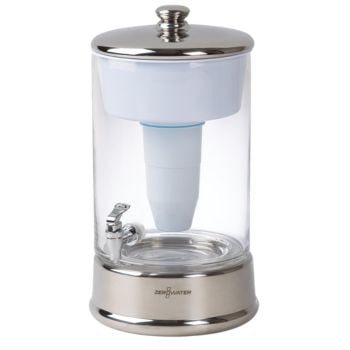
ZeroWater Glass Water Filter Dispenser — a sleek countertop unit using ZeroWater’s five-stage ion exchange filter. In Tap Score testing, it drove TDS to non-detect — rare at this price. Faster than gravity tanks like Berkey, but cartridges need more frequent swaps.
What We Like
- Delivers true zero TDS readings — verified with a built-in meter and backed by NSF/ANSI 42, 53 certified
- Glass + stainless build feels sturdier and more premium than plastic dispensers
- Convenient spigot makes it easy to dispense water without lifting or tilting
- Filters are widely available and quick to swap, no priming required
What We Don’t
- Filter life is short (20–40 gallons), leading to higher long-term cost
- Removes all minerals — water tastes “flat” to some users
🔬 Tap Score Lab Results — ZeroWater
| Parameter | Before | After | Change |
|---|---|---|---|
| Total THMs iEPA MCL: 80 ppb | 31.83 ppb | NDRemoved | −100% |
| Chloroform (THM) | 21.57 ppb | NDRemoved | −100% |
| Bromodichloromethane | 7.93 ppb | NDRemoved | −100% |
| Dibromochloromethane | 2.33 ppb | NDRemoved | −100% |
| Lead iEPA Action Level: 15 ppb | 0.5 ppb | NDRemoved | −100% |
| Fluoride | 0.7 ppm | NDRemoved | −100% |
| Sodium | 46.3 ppm | NDRemoved | −100% |
| Chloride | 67.3 ppm | NDRemoved | −100% |
| Total Dissolved Solids (TDS) | 187 ppm | NDRemoved | −100% |
Context & Methods
“ND” = Not Detected above the lab reporting limit. THMs compared to EPA MCL (80 ppb). Lead compared to EPA action level (15 ppb). Sampling protocol: ZeroWater 10-Cup pitcher tested with Tap Score Advanced City Water panel.
Baseline (Advanced City Test):
View baseline report (PDF)
Post-test (after filtration with ZeroWater 10-Cup Pitcher):
View post-test report (PDF)
🧾 How It Scored
ZeroWater stands out for being one of the few countertop dispensers with NSF/ANSI 42 & 53 certifications, proving it can cut both chlorine taste/odor and heavy metals like lead. Independent tests confirm it drops TDS to nearly zero, something most carbon filters can’t touch. That’s its clear advantage over budget gravity systems like Glacier Fresh.
In real-world use, the trade-off is speed. Our pitcher version took about 11 minutes for a full fill, so this 40-cup dispenser can stretch to 20–25 minutes. On the upside, you’re filtering in bulk — one cycle covers a day’s worth of drinking water for most families.
Build-wise, the glass carafe feels sturdier and more premium than plastic units, and the spigot pours smoothly once sealed. Still, the lid fit isn’t perfect, and tilting it while carrying can cause leaks — something to watch for when moving a full tank.
Filter life is shorter than rivals: about 15–20 gallons per cartridge before TDS creep sets in, meaning frequent replacements. With 3-packs running ~$30, annual costs can push $120–$150, far higher than Glacier Fresh or Berkey-style systems.
👉 Bottom line: If you want lab-certified lead removal and zero-TDS water in a countertop dispenser, ZeroWater delivers — but expect slower flow and higher filter costs compared to stainless gravity-fed systems.
📘 Buyers Guide
Countertop filters sit in a unique middle ground — easier than under-sink installs, but more powerful than a basic pitcher. They’re popular with renters, families who go through gallons a day, and anyone who wants proven contaminant reduction without drilling or plumbing.
The catch?.. Not all countertop systems are built the same. Some lean on carbon for everyday taste improvements, others use gravity for off-grid reliability, and a few bring full reverse osmosis power to your counter. Knowing which type matches your home, habits, and budget is the key to buying the right one.
💧 What Countertop Filters Actually Do
Countertop filters all have the same goal — give you safer, better-tasting water without a full under-sink install — but how they get there is very different.
- AquaTru Classic uses reverse osmosis, stripping out contaminants like PFAS, fluoride, and microplastics that carbon filters miss.
- Glacier Fresh Gravity is about simplicity — no power, no plumbing, just slow gravity filtration that still carries NSF 42 certification.
- Epic Pure Dispenser takes pitcher-style carbon filtration and scales it up for families who drink gallons a day.
- ZeroWater Glass Dispenser goes all-in on ion exchange, cutting TDS to zero for the “purity-at-all-costs” crowd.
👉 In short: countertop doesn’t mean “all the same.” Each type balances different trade-offs in: speed, upkeep, and contaminant coverage.
⚖️ Countertop Filters vs. Other Options

Countertop filters hit a sweet spot between pitchers, faucet mounts, and full reverse osmosis systems. They’re bigger than a pitcher, cheaper than under-sink RO, and easier to live with than most faucet-mounted cartridges. Here’s how they stack up:
- Vs. Pitchers: Larger capacity and less refilling. Epic’s dispenser holds 1.7 gallons, while ZeroWater’s glass tank pushes 40 cups — enough for families. Pitchers, by comparison, are fine for one or two people.
- Vs. Faucet Mounts: Better contaminant coverage and more reliable flow. Faucet filters can reduce chlorine and sediment, but countertop units like Epic or ZeroWater add heavy metals and PFAS reduction.
- Vs. Gravity Systems (like Berkey): Similar non-electric design, but Glacier Fresh costs less and is NSF certified. The trade-off is slower filtration versus dispensers.
- Vs. Under-Sink RO: Countertop RO like AquaTru gives lab-grade protection without drilling. It’s pricier upfront than gravity units but avoids the complexity of a full install.
👉 Put simply: pitchers are small, faucet mounts are basic, RO is most thorough, but countertop systems strike the balance — enough capacity for families, real contaminant reduction, and no plumbing.
Countertop filters are the no-plumbing middle ground: stronger than most pitchers, easier than under-sink RO, but slower and bulkier than a faucet-mounted filter. For the broader decision tree, compare our top-rated water filters by category.
🧑👩👦 Who They’re Best (and Worst) For

Countertop water filters aren’t a one-size-fits-all fix. They shine in some households and fall short in others.
Best for:
- Renters or anyone who can’t drill or plumb in an under-sink system.
- Families who need more than a pitcher but don’t want to commit to a whole-house setup.
- Preppers and off-grid users who value a non-electric backup (gravity-fed units).
- City water users who mainly want chlorine, lead, or PFAS protection without reworking their plumbing.
Not ideal for:
- Large households burning through 5+ gallons a day (filters may struggle to keep up).
- Well water with iron, sulfur, or high sediment — countertop units aren’t built for heavy-duty contaminants.
- Anyone who dislikes the “flat” taste of ultra-pure water (ZeroWater users often mention this).
The takeaway: Countertop filters are a sweet spot for small-to-medium households on city water. But if you’re dealing with tough well water or heavy daily use, you’ll want to look at whole-house or under-sink alternatives.
🧪 Why Independent Testing Matters
Filter marketing is full of bold claims — “removes 200+ contaminants” — but without independent testing, it’s hard to know what that really means. NSF/ANSI certifications and third-party labs like Tap Score are what separate proven performance from clever copywriting.
- NSF/ANSI certifications: These are standardized lab protocols. For example, ZeroWater’s NSF 53 certification verifies lead reduction, while Glacier Fresh’s NSF 42 proves chlorine removal.
- Tap Score testing: Real-world lab reports add another layer. Our AquaTru Classic cut PFAS to non-detect and our Epic dispenser wiped out chlorine byproducts in side-by-side tests.
👉 Bottom line: trust certifications and lab data — not marketing buzzwords. If a system doesn’t share results, assume it can’t back up the claims.
📏 Key Features to Look For

Countertop systems all filter water, but the details that matter most differ by type. Here’s what to watch for:
- Filtration Method: AquaTru’s RO membrane pulls out PFAS, fluoride, and microplastics. Epic relies on solid carbon for lead and chlorine byproducts. ZeroWater uses ion exchange to hit “0 TDS,” while Glacier Fresh leans on gravity carbon for steady chlorine reduction.
- Capacity: Glacier Fresh holds 3 gallons — enough for daily family use. ZeroWater’s glass reservoir runs 40 cups in a batch. Epic’s 1.7-gallon dispenser fits a fridge shelf, while AquaTru cycles 3 quarts at a time.
- Filter Life: Glacier Fresh leads with 3,000 gallons per set. AquaTru’s cartridges last 6–24 months depending on stage. Epic filters run ~150 gallons, while ZeroWater swaps out after just 20–40 gallons.
- Certifications: AquaTru carries multiple NSF/ANSI listings (42, 53, 58, 401). ZeroWater is certified for lead and chromium. Glacier Fresh is NSF 42 verified for chlorine, while Epic holds testing across 42, 53, 401, and P473.
👉 Bottom line: look for the combo that fits your household — longer filter life saves money, bigger capacity means fewer refills, and certifications give peace of mind.
💲 Real Costs: Upfront vs Ongoing

Price tags only tell half the story — filter lifespan and replacement cost matter just as much.
| System | Upfront Cost | Filter Life | Est. Annual Cost |
|---|---|---|---|
| AquaTru Classic | $449 | 6–24 mo (varies by stage) | ~$100/yr (~$0.20–$0.25/gal) |
| Glacier Fresh Gravity | $229 (includes 6 filters) | Carbon: ~3,000 gal Fluoride: ~1,000 gal |
~$50–$85/yr |
| Epic Pure Dispenser | $79 | 150 gal | ~$100–$150/yr (~$0.33/gal) |
| ZeroWater Glass Dispenser | $74 | 20–40 gal | ~$120–$150/yr |
*Estimates assume family use of ~3 gallons/day (~1,095 gal/yr). Annual cost reflects typical replacement schedules after the first year. Real-world life varies with source water.
👉 The takeaway: cheap upfront isn’t always cheap long-term. If you drink a lot of water, filter life and replacement cost matter more than sticker price.
🚫 Common Mistakes to Avoid
Even the best countertop filter won’t live up to expectations if you trip on the basics. A few pitfalls to sidestep:
- Ignoring filter life: Running past rated gallons is the fastest way to ruin taste and risk breakthrough. Mark your calendar or use a reminder app.
- Expecting faucet-level flow: Gravity and carbon systems take time. If you need instant pressure, countertop RO is the better match.
- Skipping pre-flush or priming: Filters often need an initial rinse — skipping this can lead to cloudy water or off flavors.
- Wrong water type: Most countertop units are built for treated city water, not high-iron or sulfur-heavy well water.
💡 Bottom line: stay on top of filter changes and choose a system built for your water — that’s 90% of avoiding problem
✅ Final Thoughts
Countertop water filters are about balance — easier than under-sink installs, but far more capable than pitchers or faucet mounts.
- AquaTru delivers lab-grade RO without plumbing.
- Glacier Fresh offers simple, non-electric reliability.
- Epic Pure scales pitcher-style carbon into a family-sized dispenser.
- ZeroWater nails zero-TDS purity, though with higher upkeep.
Each shines in a different lane, but all four bring something valuable to the table. If you want cleaner water without tearing into your plumbing, a countertop system is one of the smartest, most practical upgrades you can make.