
What Minerals Are in Water?

Mike Martin brings hands-on installation experience and helps validate the real-world setup and serviceability of the systems we cover.
✅ Quick answer: Water picks up minerals as it moves through rock and soil. Common ones include calcium, magnesium, sodium, potassium, iron, and silica. The mix changes from one water source to another. A lab test shows which minerals are in your water.
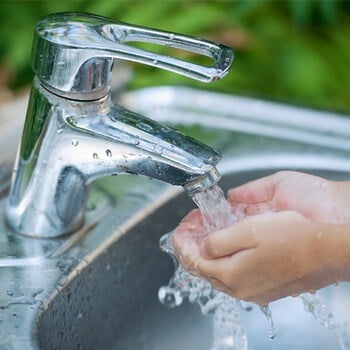
A lab report may use unfamiliar names, but the household effects are easier to understand. Calcium and magnesium cause hardness, iron and manganese can stain, sodium and chloride can affect taste, and bicarbonate helps keep pH steady.
Common minerals found in water
- Calcium and magnesium: Cause hardness, scale, and poor soap lather.
- Iron and manganese: Can cause metallic taste, stains, and sediment.
- Sodium and chloride: Can affect taste and may come from natural salt, road salt, saltwater, or softening.
- Bicarbonate: Helps control alkalinity and keeps pH from changing quickly.
- Sulfate: Can affect taste and raise TDS at higher levels.
- Silica: Can leave stubborn deposits under some conditions.
USGS lists sodium, calcium, magnesium, potassium, chloride, bicarbonate, and sulfate among the most common minerals and salts in groundwater. Local rock, soil, well conditions, and human activity determine the final mix.
🧪 Same TDS, different mineral profiles
✓ QWL kitchen-tap samples — independently analyzed from Rhode Island and Central Florida homes.
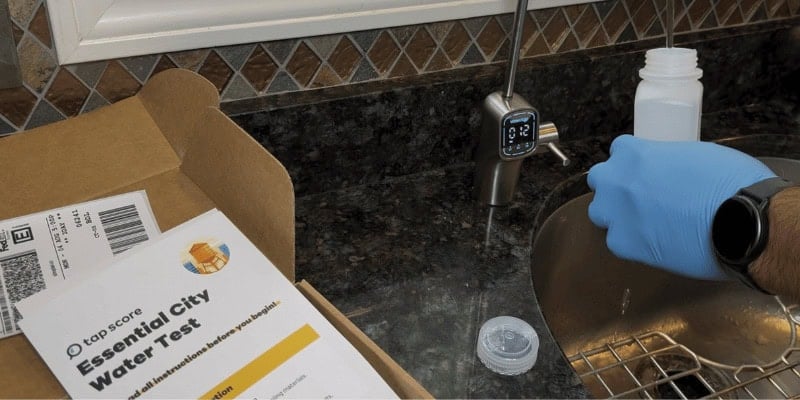
Two kitchen-tap samples we sent for laboratory analysis both measured 340 ppm TDS. One came from a Rhode Island home on well water. The other came from a Central Florida home before softening. The totals matched, but the chemistry didn’t.
Swipe on mobile to compare both water samples. The measurement column stays visible so you don’t lose your place.
| Measurement | Rhode Island well water | Central Florida well water |
|---|---|---|
| Total dissolved solids (TDS) | 340 ppm | 340 ppm |
| Hardness | 206 ppm / 12 gpg | 310 ppm / 18 gpg |
| Calcium | 59.9 ppm | 72 ppm |
| Magnesium | 13.6 ppm | 24 ppm |
| Iron | Below the lab’s reporting limit | 1.2 ppm |
The Rhode Island sample also contained 25.5 ppm sodium, 101 ppm chloride, 18.6 ppm sulfate, 20.5 ppm silica, and 5.26 ppm potassium. Those results show why a TDS reading can’t tell you whether water is hard, salty, iron-bearing, or suitable for a particular treatment.
Our rule is simple: don’t treat “minerals” as one problem. Separate hardness minerals, staining metals, dissolved salts, and aesthetic concerns before choosing equipment.
Are minerals in water good or bad?
Neither label works by itself. Calcium and magnesium are normal dietary minerals, but their presence in water can also create scale. Iron is an essential nutrient in food, yet dissolved iron can stain fixtures and give water a metallic taste. Sodium and chloride are common ions, but higher concentrations may affect taste or point to a source-water issue.
The useful questions are: What’s in the water? How much is there? Does it affect safety, taste, staining, or plumbing? A low TDS reading doesn’t prove that water is safe, and a higher reading doesn’t identify the substances behind it.
EPA regulates some drinking-water contaminants through enforceable primary standards. It also publishes non-enforceable secondary guidelines for aesthetic effects. The secondary values include iron at 0.3 mg/L and manganese at 0.05 mg/L. Chloride and sulfate are listed at 250 mg/L, while TDS is listed at 500 mg/L. State requirements may differ.
What our softener test changed
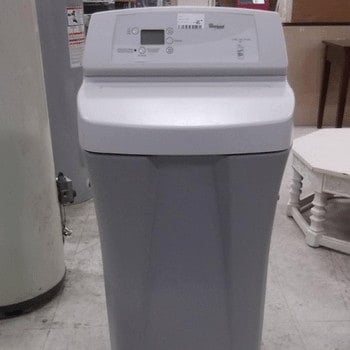
The Central Florida water needed softening because calcium and magnesium pushed hardness to 18 gpg. After treatment with the Whirlpool WHES40E, hardness fell to 1.6 gpg. Calcium dropped from 72 to 5 ppm, magnesium from 24 to 2 ppm, and iron from 1.2 to 0.1 ppm.
TDS moved only from 340 to 350 ppm. The softener changed the ionic mix by exchanging hardness ions for sodium. It didn’t broadly strip dissolved material from the water.
That distinction matters when reading a lab report. If calcium and magnesium are the problem, use hardness as the performance measure. If the goal is broad dissolved-ion reduction at the kitchen tap, reverse osmosis may fit better. See our complete Whirlpool WHES40E test.
Do tap, well, bottled, and filtered water contain minerals?
- Public tap water: Usually contains dissolved ions from its source, treatment process, and distribution system. Read the utility’s Consumer Confidence Report for local results.
- Private well water: Often reflects the surrounding rock and aquifer. Two wells in different regions can have very different hardness, iron, sodium, chloride, and silica levels.
- Bottled mineral water: Under the FDA definition, it comes from an underground source and contains at least 250 ppm TDS. Its minerals and trace elements must come from the source rather than being added later.
- Purified water: Distillation, deionization, or reverse osmosis reduces dissolved constituents. Some products add selected minerals afterward for taste.
- Filtered water: The answer depends on the technology. Sediment and carbon filters usually leave dissolved ions behind, while RO and broad ion-exchange media reduce them.
Spring water isn’t defined by having less than 250 ppm TDS. FDA classification depends on the source and collection method. Check the label or the producer’s mineral analysis instead of assuming one bottled-water category contains more minerals than another.
Does filtered water still have minerals?
Usually, but not always. A sediment cartridge catches particles. Activated carbon targets specific chemicals, tastes, odors, and disinfectants. Neither is designed to remove the major dissolved ions that make up TDS.
A softener changes calcium and magnesium into a different ionic profile. RO removes a broad share of dissolved ions. In our Waterdrop G3P800 test, TDS fell from 187 to 28 ppm. Our ZeroWater pitcher sample went from a 187 ppm baseline to not detected by the lab. Its included meter read 0–11 ppm across separate runs.
For a deeper treatment comparison, see which water filters remove or retain dissolved minerals.
How to find out what’s in your water
- Check the source. Public-water customers can start with the annual Consumer Confidence Report. Private-well owners are responsible for testing their own supply.
- Use a laboratory for identification. Ask for calcium, magnesium, hardness, sodium, chloride, sulfate, iron, manganese, alkalinity, pH, and locally relevant contaminants.
- Use TDS only as a total. A meter can track changes, but it can’t identify the ions or replace a mineral panel.
- Match treatment to the result. Don’t buy a softener, iron filter, or RO system until the chemistry supports it.
Start with our water-testing guide. If you use a private well, see what to include in a well-water test.
What to do with the results
- High calcium and magnesium: Compare water softeners if scale and soap performance are the problem.
- Iron or manganese: Identify the concentration and form before selecting treatment.
- High sodium, chloride, or broad TDS: Consider point-of-use RO when drinking water is the concern.
- Unknown mineral mix: Test first. One total number isn’t enough to choose equipment.
The goal isn’t mineral-free water. It’s knowing what’s present, deciding whether it creates a real problem, and choosing treatment that addresses that specific chemistry.
Sources: USGS groundwater basics, USGS dissolved-solids guidance, EPA drinking-water standards, and FDA bottled-water definitions.