
Common Well Water Problems: What the Signs Mean

Mike Martin brings hands-on installation experience and helps validate the real-world setup and serviceability of the systems we cover.
✅ Quick answer: Common well-water problems include hardness, iron stains, sediment, rotten-egg odor, corrosion, bacteria, and low pressure. Start with what changed at the tap, then test the water before you pick a treatment. Clear water can still hide things you can’t see, smell, or taste.
🔑 Key findings
- White scale usually points to hardness. Orange staining suggests iron, and black staining can mean manganese.
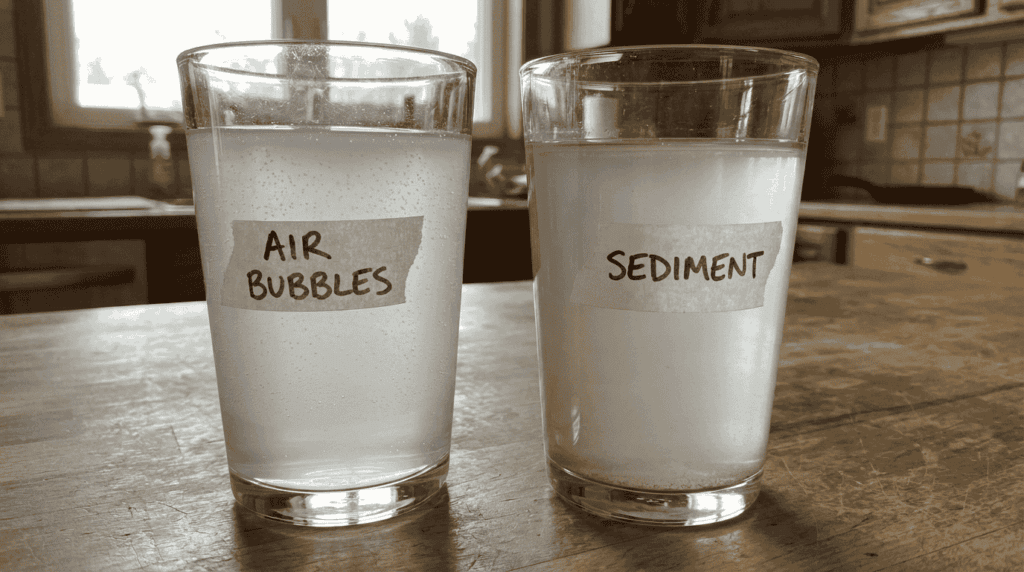
- Cloudiness is a clue, not a diagnosis. Air clears from the bottom up. Sediment settles or stays suspended.
- Odor location matters. A rotten-egg smell only in the hot water often starts in the water heater, not the well.
- Low pressure isn’t always a water-quality problem. Check fixtures, filters, the pressure system, and the pump.
- Appearance can’t confirm safety. Bacteria, nitrate, arsenic, and other contaminants only show up in a test.
🔎 What’s causing your well-water problems?
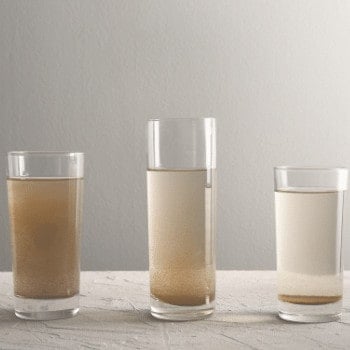
Start with the symptom, but don’t stop there. Several different problems can throw the same color, smell, or pressure change.
| What you notice | Check first |
|---|---|
| White scale or spots | Hardness |
| Orange or rusty stains | Iron, sediment, or plumbing corrosion |
| Black or gray stains | Manganese, sediment, or treatment-media fines |
| Yellow or tea-colored water | Tannins, iron, or corrosion |
| Cloudy or gritty water | Air, sediment, a disturbed well, or recent plumbing work |
| Rotten-egg odor | Water heater, hydrogen sulfide, or sulfur bacteria |
| Blue-green stains | Low pH and copper corrosion |
| Slimy orange buildup | Iron bacteria |
| Weak flow or no water | Fixture, filter, pressure tank, pump, or well yield |
| No obvious warning | Annual lab testing |
Before you buy any equipment, answer four questions:
- Does the problem affect hot water, cold water, or both?
- Does it show up at one fixture or all over the house?
- Did it start suddenly, after heavy rain, or after plumbing or well work?
- What does a water test actually detect?
Those four answers separate a local plumbing issue from a whole-house treatment problem, shifting groundwater, or a mechanical well failure.
🧪 What two kitchen-tap tests taught us
We’ve lab-tested delivered well water straight from the kitchen tap in Rhode Island and Central Florida. The results show why diagnosing a problem and verifying a fix are two different jobs.
The kitchen-tap sample came back with turbidity below the lab’s reporting limit. Iron, manganese, lead, arsenic, and E. coli weren’t detected either. But total coliform was, hardness measured 12.02 GPG, and nitrate came in at 7 mg/L as nitrogen.
The nitrate result sat below the EPA’s 10 mg/L maximum contaminant level for public systems. The coliform detection was an indicator that called for follow-up, not a treatment guess.
Test details: Kitchen-sink sample collected December 1, 2025; Microbac Laboratories; Tap Score report ZS6GBS.
Before we installed the Whirlpool WHES40E, the kitchen-tap sample measured 18 GPG hardness and 1.2 ppm iron. After treatment, hardness fell to 1.6 GPG and iron to 0.1 ppm. Calcium dropped from 72 to 5 ppm, and magnesium from 24 to 2 ppm.
The Florida results don’t prove one softener will perform the same in every home. They show the value of taking a baseline, then testing the treated water under the same household conditions. See the full Whirlpool WHES40E test results.
Our takeaway: the Rhode Island sample shows why clear water isn’t proof of safety. The Florida samples show how before-and-after testing confirms whether treatment actually solved the measured problem.
👀 Well-water problems you can see, smell, or feel
🧱 White scale, spots, or poor soap lather
Most likely: hard water from dissolved calcium and magnesium.
Hardness leaves scale on fixtures and inside your water heater. It can also make soap hard to rinse off. Confirm it with a hardness test reported in grains per gallon or mg/L as calcium carbonate.
Next step: a salt-based softener strips hardness through ion exchange. A salt-free conditioner may cut down on new scale, but it doesn’t actually soften the water.
🟠 Orange, brown, black, or yellow water
Possible causes: iron, manganese, sediment, tannins, corroding plumbing, or a recent disturbance in the well.
Water that starts clear and turns orange after it sits usually has dissolved iron oxidizing in the air. Orange slime leans more toward iron bacteria. Black staining can involve manganese, and tea-colored water that stays clear often points to tannins.
Next step: test for iron, manganese, pH, hardness, and bacteria before you pick a treatment. Start with our guides to iron in well water and brown well water.
🌫️ Cloudy, gritty, or dirty well water
Possible causes: air bubbles, sand, silt, oxidized metals, a damaged well screen, a pump set too low, or recent well work.
Fill a clear glass and let it sit. Air clears from the bottom up. Particles settle, float, or stay suspended. That quick check narrows things down, but it doesn’t tell you whether the water’s safe.
Next step: track down a sudden change before you reach for a finer cartridge. A filter can catch sediment, but it can’t repair a failing screen or stop a pump from stirring up the bottom of the well. See our guides to cloudy well water and well-water sediment.
🥚 Rotten-egg or sulfur odor
Possible causes: hydrogen sulfide in the source water, sulfur bacteria, or a reaction inside the water heater.
Compare hot and cold. An odor only in the hot water points at the heater. Odor at both taps sends you farther upstream.
Next step: test and pin down the source before you choose aeration, oxidation, catalytic carbon, disinfection, or a water-heater service. Follow our rotten-egg odor troubleshooting guide.
🔵 Blue-green stains or pinhole leaks
Possible cause: corrosive water dissolving copper out of your plumbing.
pH matters, but it isn’t the only measure of corrosivity. Alkalinity, hardness, dissolved solids, temperature, and the plumbing itself all play in.
Next step: test pH, alkalinity, copper, lead, and the relevant corrosion indicators before you install an acid neutralizer. Learn more about raising low well-water pH.
🦠 Problems you usually can’t spot at the tap
Bacteria, nitrate, arsenic, uranium, pesticides, fuel-related chemicals, and PFAS may not change the water’s color, taste, or smell at all. Geography, nearby land use, well construction, flooding, and your own plumbing decide which tests make sense.
Total coliform is an indicator, not the same result as E. coli. If a lab detects coliform or another health-related concern, switch to another safe water source when you’re advised to, and contact your local health or environmental department for interpretation, confirmation, and next steps.
Next step: use a state-certified lab and pick analytes based on local risks. Our well-water testing guide walks through sampling and test selection.
⚙️ When the problem is the well system, not the water
Weak flow, swinging pressure, air sputtering, and no water at all can come from your treatment equipment or the well system, not the water chemistry.
- One weak fixture: check its aerator, showerhead, valve, and supply line.
- Pressure drops when several fixtures run: check the whole-house filter, pipe restrictions, pump capacity, and well yield.
- Pressure rises and falls fast: the pressure tank, switch, or pump may be cycling wrong.
- Water stops after heavy demand, then returns later: you may be pumping faster than the well recovers.
- Pump runs but never builds pressure: shut it off and have the system checked before it does more damage.
We’ve watched a neglected sediment cartridge pass enough water for a single faucet, then choke the whole house the second a shower, the washing machine, and the kitchen sink all ran together. And we’ve seen heavy outdoor watering pull a private well down for about 24 hours, with pump trouble piling on top of it.
Both felt about the same at the tap, but they needed completely different fixes. Use our guides for low well-water pressure, well recovery, and well-pump failure signs.
🛡️ How to prevent common well-water problems

🧪 Don’t skip annual water testing
The CDC recommends testing private well water at least once a year for total coliform bacteria, nitrate, total dissolved solids, and pH. Ask your local health department what else is worth adding for your area.
Test again when the water changes, after flooding or well repairs, and when new land use nearby raises a concern. Follow the lab’s sampling instructions to the letter, because where you collect the sample and how you flush the line changes what the result actually represents.
🧰 Stay on top of well maintenance
- Inspect the visible well cap, casing, wiring, and the ground around it.
- Keep runoff, soil, and standing water away from the wellhead.
- Track changes in pressure, pump cycling, sediment, color, taste, and odor.
- Replace treatment cartridges based on pressure drop and real water conditions, not the calendar alone.
- Have the well inspected when performance changes or visible damage shows up.
🏡 Safeguard your well from contaminants
Keep fuel, fertilizer, pesticides, animal waste, and septic components away from the well, following your state and local setback rules. Add backflow protection on outdoor connections where it’s required.
If floodwater reaches the well, don’t assume a wrapped or covered cap kept it clean. Don’t drink the water until the well’s been inspected, disinfected if needed, and tested per local health guidance.
🛑 Protect your well like a pro
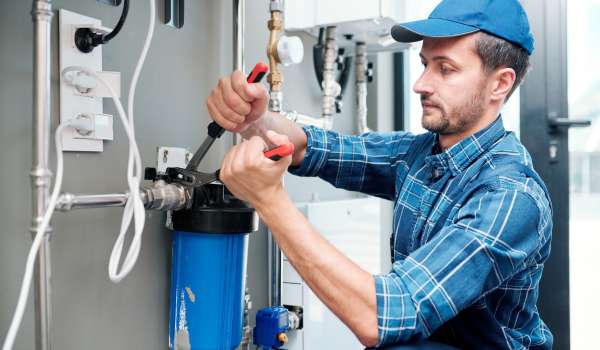
The best treatment plan starts with three facts: what the household notices, what the lab detects, and what the well system can actually deliver. A filter picked from symptoms alone can miss the real contaminant or choke your flow for no reason.
Keep copies of lab reports, equipment settings, cartridge changes, repairs, and shifts in well performance. That history makes the next problem far easier to diagnose, and the fix easier to verify.
❓ Common questions
What’s the most common problem with well water?
Hard water is one of the most common complaints, but there’s no universal answer. Local geology, well construction, plumbing, and nearby land use decide whether hardness, iron, sediment, bacteria, nitrate, or something else is the likely culprit.
How can you tell if a well is going bad?
Repeated loss of water, dropping yield, sediment after pumping, fast pump cycling, unexplained pressure swings, and damage around the wellhead all warrant a look. Those same symptoms can come from replaceable equipment, though, so testing the well and pressure system beats guessing.
Can well water make you sick?
Yes. Well water can carry harmful germs or chemicals with no visible warning. If you suspect or detect contamination, switch to another safe water source when advised and contact your local health department for guidance.
Should you install a filter before testing?
Not unless you already know the problem and what it takes to treat it. Testing first keeps you from buying equipment that targets the wrong contaminant, can’t handle the water chemistry, or throttles your household flow.
The bottom line
Use color, odor, scale, sediment, and pressure changes as clues. Then confirm the cause before you treat it. The right answer might be a water softener, a contaminant-specific treatment, a fresh cartridge, a plumbing repair, or work on the well itself.
The goal isn’t to filter everything. It’s to find what’s actually wrong, fix the source when you can, and confirm the solution works at the tap.