


Most whole-house water filter systems cost somewhere between about $1,100 and $3,500 installed, but the real total can land much lower or much higher depending on the type of system, the plumbing work, and the long-term maintenance.
That is the part many homeowners miss. The cheapest system to buy is not always the cheapest to own. A basic cartridge setup can cost less up front, but frequent filter swaps can add up. A larger media tank or backwashing system can cost more at the start, but require less hands-on maintenance over time.
This guide breaks down what whole-house systems usually cost to buy, install, and maintain — plus the hidden costs that catch people off guard.
💡 Key Takeaways
- Whole-house systems often start around the low four figures installed, but premium or more complex setups can run several thousand dollars more.
- Installation can be a major part of the final bill, especially when plumbing access is tight or the system has multiple components.
- Cartridge systems usually cost less up front, while larger media tanks or backwash systems can cost more but reduce maintenance frequency.
- UV, softeners, iron treatment, and combo systems can raise both upfront and long-term cost.
- The cheapest system is not always the cheapest to own over five to ten years.
💰 Whole-House Water Filter Cost at a Glance
| System Type | Typical Buy + Install Range | Best Fit |
|---|---|---|
| Basic sediment setup | $150 – $800 | Visible rust, sand, silt, debris |
| Basic cartridge whole-house system | $700 – $2,000 | Lower-cost whole-home filtration |
| Carbon whole-house system | $1,100 – $3,500 | Chlorine, odor, taste, general city-water cleanup |
| UV add-on or UV system | $500 – $2,000 | Bacteria and microbial disinfection |
| Water softener | $700 – $3,000+ | Hard water scale and mineral buildup |
| Iron / sulfur / well-water treatment | $1,500 – $6,000+ | Well water with iron, sulfur, manganese, or multiple issues |
| Combination system | $2,000 – $6,000+ | Homes with more than one serious water problem |
💡 Helpful Note: The biggest cost jump usually happens when you move from a basic cartridge setup into larger media tanks, backwashing systems, well-water treatment, or multi-stage combinations.
🧾 What Changes the Price Most?

The final price depends less on the label on the box and more on what your water actually needs.
| Cost Driver | Why It Matters |
|---|---|
| System type | A basic sediment or carbon setup costs far less than a full well-water treatment system. |
| Number of stages | More stages usually mean more housings, more media, and more installation time. |
| Home size and flow rate | Larger homes often need bigger tanks, bigger housings, or higher-capacity valves. |
| City water vs. well water | Well-water systems often need more specialized treatment than city-water chlorine reduction. |
| Plumbing complexity | Tight spaces, older plumbing, or extra rerouting can raise labor cost quickly. |
| Add-ons | UV, softeners, prefilters, bypass valves, and monitoring upgrades all add cost. |
🔄 Cartridge Systems vs. Media Tanks: Which Costs More Long Term?
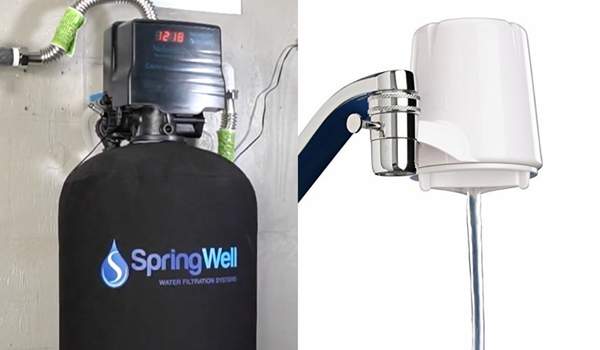
This is one of the biggest ownership decisions.
Cartridge systems are usually cheaper up front. They are easier to understand, easier to replace in stages, and often make sense when the main job is sediment or basic carbon filtration.
Media tanks and backwashing systems usually cost more to buy and install, but they can reduce the hassle of frequent cartridge swaps and may be a better fit for higher-demand homes or heavier treatment loads.
💡 Practical takeaway: A cheaper cartridge setup can become the more expensive option over time if you are burning through replacements several times a year.
👉 Compare whole house water filters
🛠️ Installation Cost: What to Expect

Installation is one of the easiest line items to underestimate.
Simple systems may be straightforward for a confident DIY homeowner, but whole-house installs still involve the main line, shutoffs, housing placement, service access, and sometimes electrical or drain requirements.
Professional installation often falls somewhere in the several-hundred-dollar range and can move higher when the plumbing is tight, the home is older, or the system includes multiple treatment stages.
You may want a pro if:
- The install area is tight or awkward
- You are adding multiple components at once
- The system includes UV, drains, or more advanced treatment gear
- You are not comfortable cutting into the main line
🧪 Annual Maintenance Cost
Maintenance is where the “cheap” system can stop feeling cheap.
| Ongoing Cost | What to Budget For |
|---|---|
| Cartridge replacements | Often every few months to once a year, depending on water quality and housing size |
| UV bulb replacement | Usually a recurring yearly or scheduled maintenance item |
| RO membrane replacement | Less frequent, but more expensive when it comes up |
| Softener salt | Ongoing cost for salt-based softeners |
| Occasional service parts | O-rings, housings, fittings, or valves over time |
Many homes can stay in a rough annual maintenance range of around a hundred to a few hundred dollars, but heavily loaded systems or more complex setups can run higher.
⚠️ Hidden Costs People Forget

- Prefilters and replacement housings
- Bypass valves and shutoff upgrades
- Drain or outlet needs for certain systems
- Extra sediment stages to protect expensive media
- Pressure issues that force a larger housing or larger tank than you planned on
- Labor for a more complicated install than expected
💡 Helpful Note: The system quote is not always the total project cost. Install accessories and long-term replacement parts matter just as much.
🔬 Test Your Water Before You Buy

You can overspend on water treatment very easily if you skip the water test.
A test helps you answer the only question that really matters: what problem are you actually paying to solve?
If the issue is basic sediment, that is one budget. If it is chlorine and odor, that is another. If you are on well water and dealing with iron, sulfur, bacteria, or several issues at once, the cost picture changes fast.
🧪 Pro Tip: Testing first usually saves more money than trying to “future-proof” the house with equipment you may not actually need.
📈 When Spending More Actually Saves Money
Sometimes the better financial decision is spending more up front.
- A larger housing may reduce the frequency of replacements
- A media tank may reduce the hassle and cost of frequent cartridge swaps
- Installing compatible components together can be cheaper than adding them one by one later
- A sediment prefilter can protect more expensive downstream treatment and lower overall maintenance cost
The right comparison is not just purchase price. It is purchase price + install + maintenance + replacement frequency.
🤔 Is a Whole-House Water Filter Worth the Money?
A whole-house filter is worth it when the problem affects more than one faucet or the house itself.
If you are trying to reduce chlorine in showers, protect plumbing from sediment, deal with sulfur smells, or treat broader whole-home water quality issues, the value is much easier to justify.
If the problem is only drinking water at one sink, a point-of-use system may be the better financial choice.
📌 Final Thoughts
Whole-house water filter costs vary because the systems themselves vary so much. A basic setup can be relatively affordable, while a premium multi-stage or well-water treatment system can cost several thousand dollars by the time it is installed.
The smartest move is to budget for the full ownership picture, not just the sticker price. Test the water first, match the system to the actual problem, and pay attention to maintenance as much as the install quote.
That is how you avoid buying a cheaper system that ends up costing more to own.