
What Is a TDS Meter — and Should You Use One?

Mike Martin brings hands-on installation experience and helps validate the real-world setup and serviceability of the systems we cover.
✅ Quick answer: Rinse the probe, place it in a clean water sample, stir gently, and wait for the number to stabilize. A TDS meter estimates dissolved ions from electrical conductivity. It can track changes and filter performance, but it can’t identify contaminants or prove that water is safe.
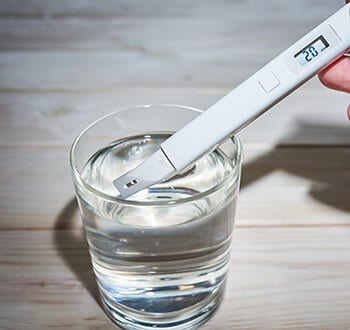
How to use a TDS meter
- Use a clean cup. Soap, mineral residue, or droplets from another sample can change the reading.
- Rinse the probe. Swish it in the water you’re about to test, then discard that rinse.
- Collect a fresh sample. Fill the cup deep enough to cover the probe without passing the meter’s immersion line.
- Turn on the meter and stir gently. This clears trapped air from the electrodes.
- Wait for the display to settle. Use the hold button if the meter has one, then record the result in ppm.
- Rinse and store it properly. Follow the manufacturer’s directions for cleaning, calibration, and probe storage.
When comparing untreated and filtered water, use the same meter, clean cup, and water temperature. Test the samples close together so a change in the source doesn’t get mistaken for filter performance.
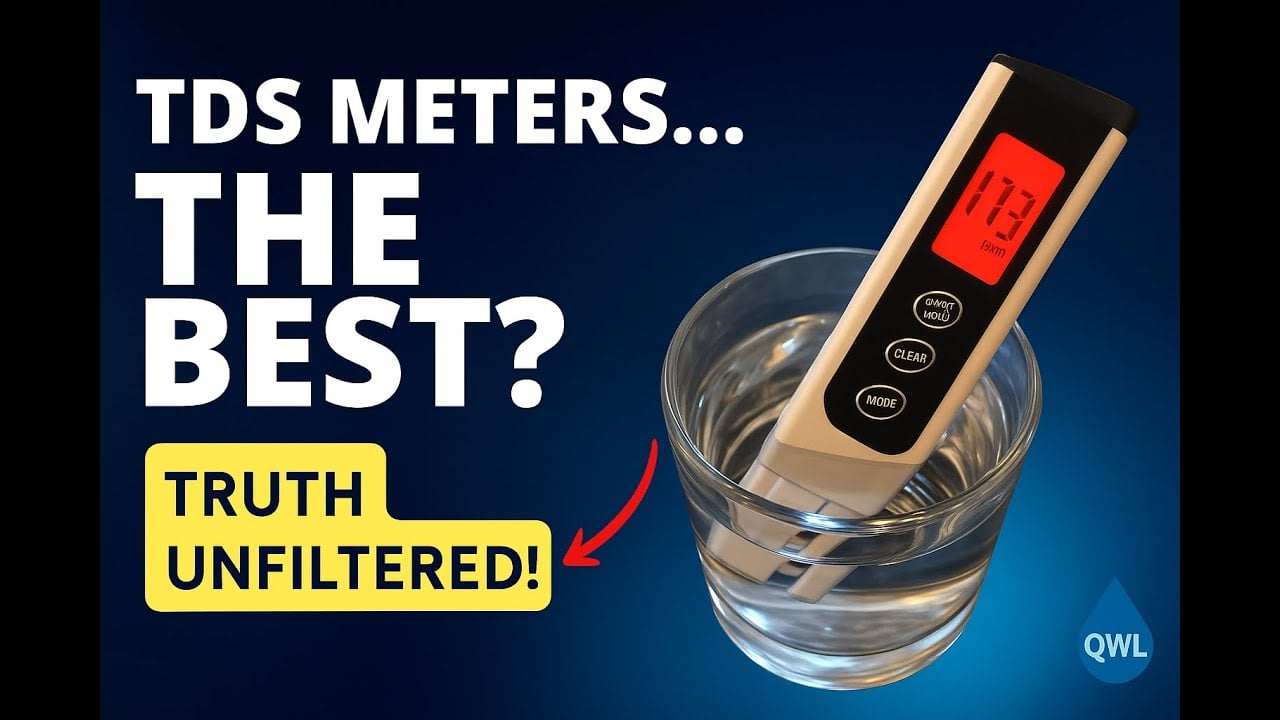
How to read a TDS meter
The display usually reports parts per million. In dilute water, a reading of 187 ppm is commonly treated as roughly 187 milligrams of dissolved solids per liter. The number is still an estimate because the meter measures conductivity rather than weighing the solids.
There isn’t a universal TDS chart that can label a sample safe or unsafe. The same reading can come from calcium and magnesium, sodium and chloride, nitrate, or a different mixture of dissolved ions.
| Reading pattern | What it can tell you | Next step |
|---|---|---|
| Stable near the usual baseline | The total conductivity hasn’t changed much | Keep tracking the trend |
| Sudden unexplained increase | The dissolved-ion mix or concentration may have changed | Retest, then use a lab if the change holds |
| Large drop after RO | The membrane is reducing conductive dissolved ions | Calculate the reduction and track it over time |
| Similar reading after softening | Expected because ion exchange swaps hardness ions for sodium | Use a hardness test to check the softener |
| Low reading with an odor or other concern | The meter can’t rule out nonionic or low-level contaminants | Test for the specific concern |
The EPA’s 500 mg/L TDS value is a non-enforceable secondary guideline tied to aesthetic effects such as deposits, staining, hardness, and taste. It isn’t a health-based pass/fail line.
🧪 What our meter and lab results showed
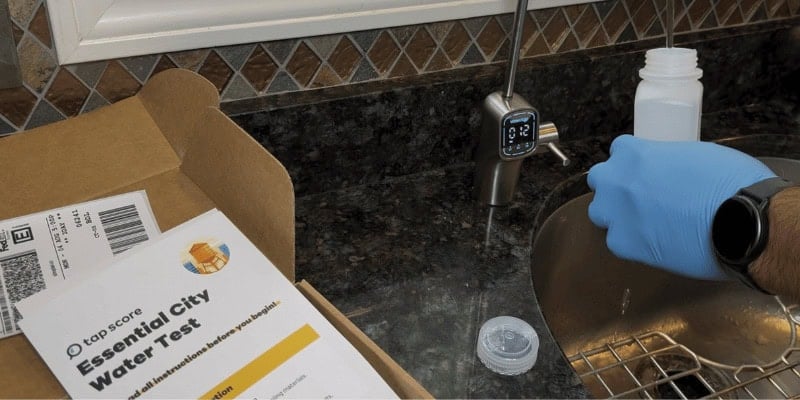
We don’t use one TDS number as a water-quality score. We compare it with the treatment technology and, when safety or contaminant reduction matters, a laboratory report.
| QWL test | TDS result | What the number meant |
|---|---|---|
| ZeroWater pitcher | 187 ppm baseline; lab result not detected; included meter read 0–11 ppm across separate runs | Its mixed-bed ion-exchange media removed nearly all measurable dissolved ions in our samples |
| Waterdrop G3P800 RO | 187 to 28 ppm | The fresh membrane and filters produced an 85% reduction in our test |
| Whirlpool WHES40E softener | 340 to 350 ppm | TDS stayed effectively similar while hardness fell from 18 to 1.6 gpg |
Those results expose the meter’s real value. It tracked dramatic ionic reduction from ZeroWater and RO, but it would have missed the Whirlpool’s 91% hardness reduction if we had treated TDS as the performance score.
See our complete ZeroWater pitcher test, Waterdrop G3P800 lab results, and Whirlpool WHES40E test.
How a TDS meter works
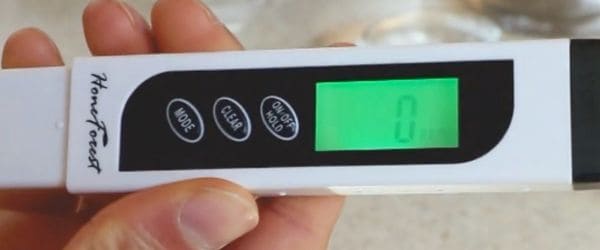
The electrodes measure how easily electricity passes through the sample. Dissolved ions such as calcium, magnesium, sodium, chloride, and bicarbonate increase conductivity. The meter applies a conversion factor and displays an estimated TDS value.
Different meters may use different conversion factors, so two models can disagree on the same sample. Temperature also changes conductivity. Automatic temperature compensation helps, but consistent testing conditions still produce better comparisons.
How to calculate RO reduction
Measure the feed water and RO water, then use this formula:
TDS reduction (%) = (feed TDS − filtered TDS) ÷ feed TDS × 100
Using our Waterdrop result: (187 − 28) ÷ 187 × 100 = 85% reduction.
Don’t judge a membrane from one isolated reading. Compare the percentage with the system’s established baseline under similar conditions. A sustained decline can point to membrane wear, a bypass, poor sealing, changing pressure, or another setup issue.
What a TDS meter can’t detect
A TDS meter can’t tell you whether the reading contains beneficial minerals or a contaminant. It also can’t reliably detect or rule out:
- PFAS and many organic chemicals
- Lead, arsenic, nitrate, or another specific ion
- Bacteria, viruses, and other microbes
- Pesticides, pharmaceuticals, and disinfection byproducts
- Hardness as a separate measurement
Some of these substances may affect conductivity, but the meter can’t separate their contribution from everything else. A hazardous concentration can also be far too small to create a meaningful change in the total reading.
When to order a laboratory test
Use a laboratory when you need to identify what’s present, select treatment, or verify contaminant reduction. Testing is especially useful when:
- The reading changes sharply and stays elevated after retesting.
- Your well has been flooded or its taste, odor, or appearance changes.
- You’re concerned about lead, PFAS, nitrate, arsenic, bacteria, or another named contaminant.
- You’re choosing a treatment system and don’t know what drives the reading.
A meter is best for repeatable trend checks. A lab is what turns the total into specific substances and concentrations. Start with our water-testing guide when you need that detail.
What to do with the result
- Reading changed unexpectedly: Repeat the test with a clean cup before drawing a conclusion.
- RO reduction is declining: Check the system’s baseline, filters, membrane, pressure, and installation.
- Hardness is the concern: Use a hardness test rather than a TDS meter.
- You want lower TDS: See which TDS-reduction methods work.
- You suspect contamination: Test for the specific contaminant instead of trusting the total.
You don’t need the lowest number. You need a repeatable reading, the right test for the question, and treatment matched to what’s actually in the water.
You can buy the meter we tested on Amazon. Check the current price.
Sources: EPA secondary drinking-water standards, WHO total dissolved solids fact sheet, and USGS dissolved-solids guidance.