


Quick answer: Size a whole house water filter around your home’s peak water demand. That means the busiest overlap of showers, faucets, and appliances, not square footage or bathroom count alone.
Most sizing mistakes come from matching a filter to a number on paper instead of how the house actually uses water. A system that looks right in the product description can still disappoint once two showers, a washing machine, and a kitchen faucet start running at the same time.
What this guide covers:
- Why peak overlap matters more than bathroom count
- How to estimate the right GPM for your home
- What plumbing size and filter format actually change
- Why cartridge systems punish undersizing faster than tank systems
- What undersizing looks and feels like in daily use
🚿 Size For Peak Demand
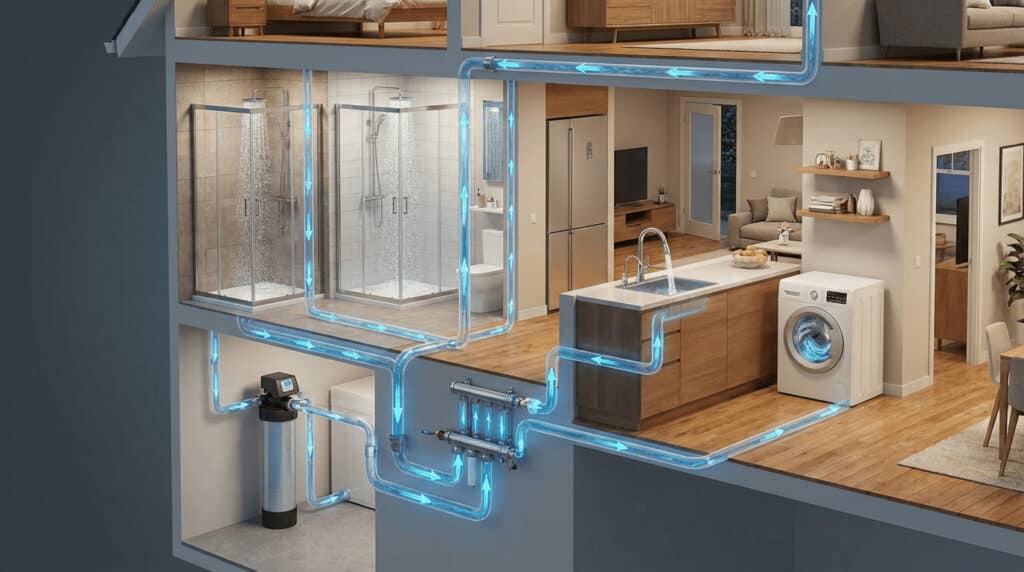
The right size for a whole house water filter comes down to one thing: how much water your home needs at the same time during the busiest part of your day.
Square footage doesn’t tell you that. Neither does bedroom count. A smaller home with a heavy morning routine can need more flow capacity than a larger house where people rarely overlap. Two showers running while someone starts a load of laundry and the kitchen faucet is on tells you far more about what size filter you need than any room count will.
Simple rule: Size for the busiest minutes of your day, not the quiet ones.
📊 Quick Sizing Chart by Home Type
These ranges are a starting point. Fixture overlap, sediment load, plumbing restrictions, and filter format can all push the right answer up or down from here.
| 🏠 Home Setup | 🚿 Typical Busy-Time Overlap | 💧 Starting GPM Target | 🧰 Usually the Better Fit |
|---|---|---|---|
| 1-2 bath home | One shower + one sink or appliance | ~6-8 GPM | Compact tank or correctly sized cartridge system |
| 2-3 bath home | Two showers or one shower + laundry + faucet | ~8-12 GPM | Mid-size tank system or high-flow cartridge setup |
| 3-4 bath home | Two showers + sink + appliance overlap | ~10-15 GPM | Higher-capacity tank or larger multi-stage system |
| 4+ bath / larger family | Frequent multi-bathroom overlap | ~12-20+ GPM | Tank-based system with more headroom |
| Well water with sediment or iron | Normal overlap plus dirtier water loading the media faster | Match household demand first, then account for prefiltration | Dedicated well setup, often with sediment stage ahead of the main filter |
From experience: Bathroom count gets you in the ballpark. Your actual morning routine tells you whether to stay there or go up a size.
🛁 Count the Fixtures That May Run at the Same Time
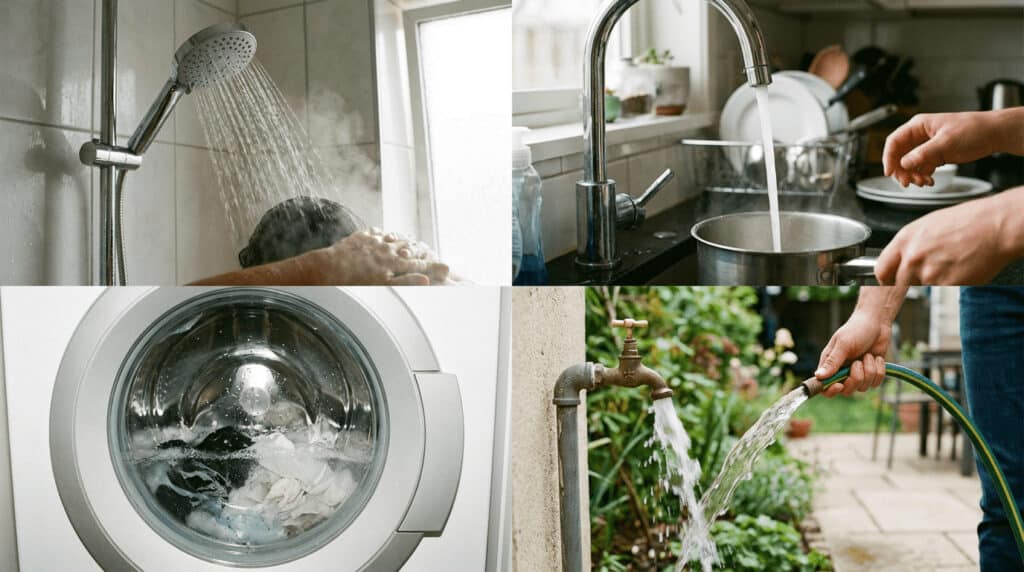
You don’t need to size for every fixture in the house running at once. You need to size for the combinations that actually happen during the busiest part of your day.
The usual suspects:
- Showers
- Kitchen faucet
- Dishwasher
- Washing machine
- Outdoor spigot or hose bib
If your house regularly runs two showers while someone uses the kitchen sink and the washer kicks on, that overlap is your real sizing number. Not the “3-bathroom home” label on the product page.
This is where most buying mistakes start. The filter looked big enough in the description. It just wasn’t matched to how the house actually uses water.
Bathroom count can help narrow the range, but it does not tell you how the house truly runs. A 3-bath home with two people may place less demand on a filter than a 2-bath home with a larger family, back-to-back showers, and a washer running every morning.
In practice: Think through your busiest morning routine. That tells you more about sizing than square footage or room count ever will.
🔩 Flow Rate vs Pressure: What You Actually Feel
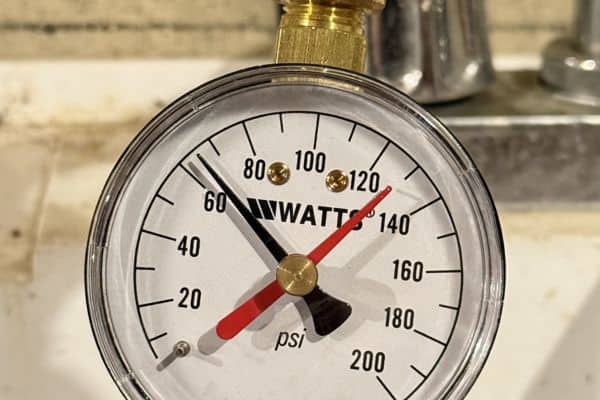
Most homeowners say “pressure drop” but what they’re actually feeling is weak flow when multiple fixtures run at the same time. Those aren’t quite the same thing.
A strong static pressure reading doesn’t mean the filter is sized right for real household demand. Flow capacity, restriction through the housing, dirty cartridges, sediment loading, and bottlenecks at the connections can all make the system feel strained even when the gauge looks fine.
That’s why the wrong filter can seem acceptable when one shower is running, then feel noticeably weak the moment the washing machine, a second bathroom, or the kitchen sink joins in.
Take note: What matters to most homeowners isn’t a PSI number on a gauge. It’s whether the house still feels strong when everything is running at once.
🔧 3/4-Inch vs 1-Inch Plumbing: What Actually Matters
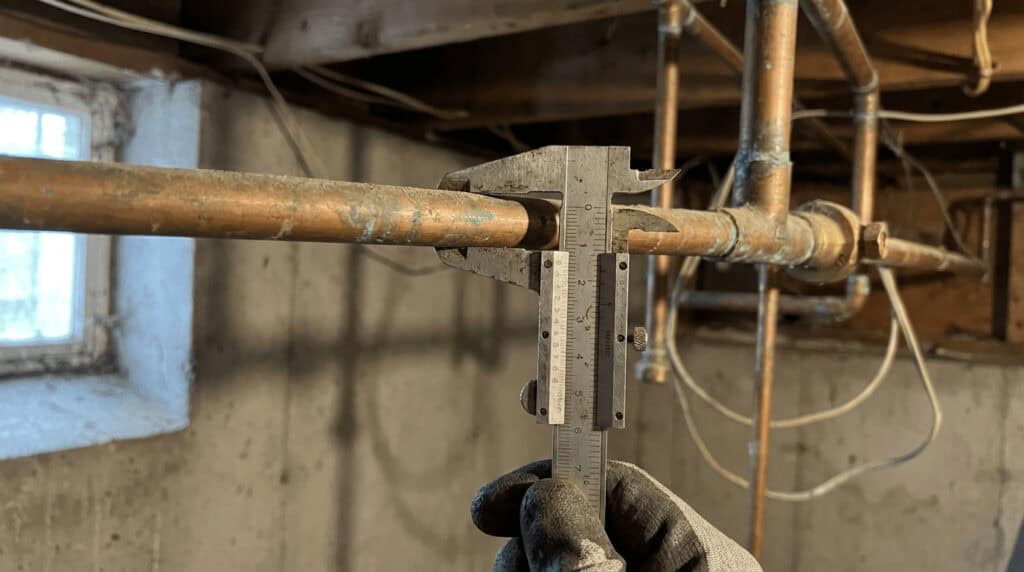
Most homes run on 3/4-inch or 1-inch plumbing, but the pipe size alone doesn’t tell the full story. Inlet and outlet size, filter head design, fittings, elbows, reducers, and restrictions anywhere else in the run can all affect real-world performance.
A larger tank or housing doesn’t automatically mean better flow if something else in the setup creates the choke point. The smartest way to size a system is to look at the full path the water has to travel, not just the filter body in the product photo.
Worth noting: The system is only as free-flowing as its narrowest section.
🏠 Tank vs Cartridge: Sizing Isn’t Equal
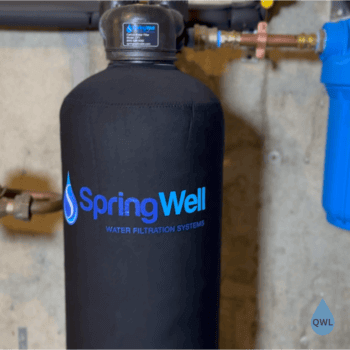
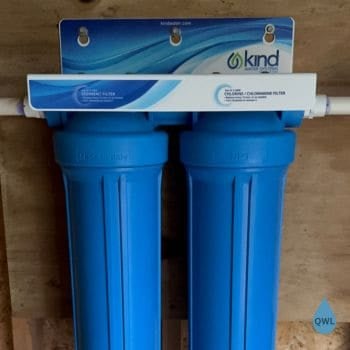
Both tank and cartridge systems are sized around flow demand, but they don’t behave the same once the house is under stress.
Cartridge systems are less forgiving when you size too close to your demand ceiling. As the media loads up with sediment, rust, or debris, performance tapers off faster, especially in homes with dirtier water or heavier fixture overlap. Tank systems tend to hold up better under sustained whole-home demand and carry lower long-term upkeep.
Cartridge systems can still work well in smaller homes, tighter utility spaces, or lower-demand setups. They just need more headroom when you size them.
One thing people miss: both system types use the same basic sizing logic, but cartridge platforms will show you the consequences of undersizing sooner.
💧 Well vs City Water: The Pipe Size Isn’t the Problem

The plumbing size is often similar either way. What changes is the water itself.
City water sizing is mostly about fixture overlap and keeping the house supplied during normal use. Well water adds sediment, iron, sulfur, manganese, and other loading factors that can make a filter feel undersized faster, even when the plumbing looks identical to a city water setup.
That’s why prefiltration, media choice, and water quality matter just as much as the GPM rating. A system that performs fine on clean municipal water may need extra help on a private well where the incoming water carries more particulate or nuisance contaminants.
From experience: the sizing difference between well and city water usually comes down to the burden the water places on the system, not the pipe size.
⚠️ What Happens When You Undersize a Whole House Water Filter

- Weaker shower performance when fixtures overlap
- Faster cartridge clogging and shorter filter life
- More frequent maintenance and filter changes
- Noticeable flow loss during the busy parts of the day
- Frustration when the system looked fine on paper
The tricky part is that an undersized system doesn’t always fail right away. It can work well enough at first, then start feeling more restrictive once real household use, dirtier water, or loaded media expose the lack of margin.
Worth noting: by the time it feels obviously wrong, the system has usually been working against you for a while.
🧩 Common Whole House Sizing Mistakes

- Buying by stage count instead of usable flow rate
- Using bathroom count as the only sizing method
- Ignoring connection size, port size, or restrictive fittings
- Forgetting how sediment load changes real-world performance
- Choosing a cheaper cartridge system for a high-demand household
- Leaving no headroom for future water use or heavier overlap
- Assuming a bigger-looking housing automatically means better delivery
Real talk: if you’re stuck between two sizes, the one with more breathing room almost always wins long term.
🏆 Which of Our Top Picks Fit Different Home Sizes?
Here is how we think about system fit when sizing is the main question.
- iSpring WGB32B — best for moderate-demand homes that want a budget entry point. Works well for 1-2 bath setups with lighter daily overlap.
- Kind E-1000 — stronger flow than most cartridge systems at 15 GPM, making it a better fit for 2-3 bath city-water homes that want a compact wall-mount without undersizing.
- Aquasana EQ-1000 — a good match for 2-3 bath city-water homes that also deal with scale. The TAC conditioner adds value without adding maintenance, but the 12 GPM ceiling matters in higher-demand setups.
- SpringWell CF1 — the better choice when you want real headroom. Rated up to 20 GPM depending on model size, and in our own 2-bathroom home it held 65 PSI after three years of daily use.
- SpringWell WS — built for well water where the sizing conversation includes both flow demand and the burden the water places on the media. Iron, sulfur, and manganese change the math in ways a city-water GPM rating alone won’t capture.
See our full roundup: Best Whole House Water Filter Systems
✅ The Bottom Line on Sizing
Peak demand, not paper specs. Headroom, not the edge of your limit. The full flow path, not just the filter body. If you get those three things right, the system will perform the way you expected when you bought it.
If you’re ready to match a specific system to your home, the roundup covers all six of our top picks with sizing context for each one.
❓FAQ
The right size depends on your peak water demand, fixture overlap, plumbing size, and filter format. Bathroom count can help as a shortcut, but it should not be the only thing you use.
That depends on how much water your home may need at the same time. The goal is to size for your busiest overlap periods so showers, faucets, and appliances can run without obvious flow loss.
What homeowners usually notice is weaker flow when several fixtures run together. An undersized or clogged system can make the house feel starved during busy demand periods even if the pressure gauge looks acceptable.
Yes. Most homes use 3/4-inch or 1-inch plumbing, but fittings, inlet and outlet size, filter head design, and restrictions elsewhere in the setup can affect real-world performance too.
Both use the same basic sizing logic, but cartridge systems are usually less forgiving if you size too close to peak demand. Larger homes often benefit from systems with more headroom and lower maintenance burden.
The plumbing size may be similar, but the water can be much different. Sediment, iron, sulfur, and manganese can make a filter feel undersized faster if the system is not matched correctly or prefiltration is skipped.
No. Bathroom count is a useful shortcut, but it does not account for fixture overlap, household habits, plumbing restrictions, or dirtier water that can load the filter faster.
The safest approach is to size for your busiest water-use periods and leave some headroom instead of buying right to the limit. That gives the system more margin when fixtures overlap or filters start loading up.
Turn off all indoor faucets, place a 5-gallon bucket under an outdoor spigot, and time how long it takes to fill. If it fills in 60 seconds, your flow rate is roughly 5 GPM. Use that number as your baseline when comparing filter specs.