
💨 Cloudy Well Water? Here’s What It Means (and How To Clear It Up)

Ava Martin is the founder and chief editor of Quality Water Lab.

Mike Martin brings hands-on installation experience and helps validate the real-world setup and serviceability of the systems we cover.
If your well water looks cloudy, the most common causes are air bubbles, sediment, iron, manganese, or a problem with the well itself. If the cloudiness clears after a few minutes, it’s usually just air. If particles settle to the bottom or the water leaves stains, sediment or minerals are more likely.
Cloudy well water is not always dangerous, but it should not be ignored. In some cases it is harmless. In others, it can point to sediment intrusion, iron bacteria, low well levels, or a failing well component. The fastest way to figure it out is to run a simple glass test, inspect the system, and test the water if the problem keeps coming back.
⚡ Quick Take
- 💨 If it clears from the bottom up: usually tiny air bubbles
- 🪨 If particles settle to the bottom: usually sediment, sand, or silt
- 🧪 If it looks orange, brown, or black: iron or manganese is more likely
- 🚰 If it started after heavy rain or heavy water use: your well may be pulling in extra sediment
- 🔍 If it keeps happening: test the water before buying a filter
🪨 Why Your Well Water Looks Cloudy

If your tap water looks milky, hazy, or foggy, you are usually dealing with turbidity, which means tiny suspended particles or bubbles are scattering light in the water. That can come from something harmless, like trapped air, or something more frustrating, like silt, iron, manganese, or a well system issue.
The most common causes are below.
💨 1. Air Bubbles
Air bubbles are one of the most common causes of cloudy well water. They can show up after pump cycling, plumbing leaks, pressure tank issues, or dissolved gases coming out of solution.
How to tell: Fill a clear glass and let it sit for 2 to 5 minutes. If the water clears from the bottom upward, it is usually air. No filter is needed if that is the only issue.
⚠️ Rare case: If your water also sputters, smells unusual, or seems gassy, talk to a licensed well contractor. Methane is uncommon, but it is not something to ignore.
🧱 2. Sediment, Sand, or Silt
If cloudy water leaves grit in the glass or particles settle to the bottom, sediment is more likely. This can happen when the well screen is worn, the casing is compromised, the aquifer is producing a lot of fine material, or the well is being pushed hard.
💡 Heads up: If both hot and cold taps are cloudy, or pressure has dropped, sediment buildup may already be affecting your plumbing or filter setup.
🧪 3. Iron or Manganese
If the water looks cloudy and also leaves orange, brown, or black staining, iron or manganese is a more likely cause. These minerals are common in well water and can make water look off even when the issue is not dangerous from a health standpoint.
In some wells, iron bacteria can also be part of the problem. That often shows up as slime, staining, or a rust-colored buildup inside toilet tanks and plumbing.
👉 If staining or metallic water is part of the problem, start here: well water filtration systems for iron, sediment, and other common well issues.
📉 4. Low Water Level or Well Problems
A shallow, stressed, or over-pumped well can stir up sediment and make water look murky, especially after heavy rain, drought, or unusually high water use. A damaged well screen, cracked casing, or pump issue can do the same thing.
💡 Pro tip: If the problem gets worse after long showers, laundry, irrigation, or other heavy draw, your well may be pulling harder than normal and dragging more particles into the system.
🔎 Quick Home Test: Air or Sediment?
Before you assume you need a filter, do this simple check:
- Fill a clear drinking glass with cold water from the tap.
- Set it on the counter for 2 to 5 minutes.
- Watch how the cloudiness changes.
- If it clears from the bottom up: usually air bubbles
- If particles settle to the bottom: usually sediment or mineral solids
- If it stays discolored or leaves staining: test for iron, manganese, and related well water issues
This quick test will not tell you everything, but it usually helps you separate a harmless appearance issue from a real filtration problem.
💧 How to Fix Cloudy Well Water

The right fix depends on the cause. The best approach is to work through the problem in order instead of jumping straight to a filter.
🛠️ Step 1: Check the Well and Plumbing System
Before spending money on tests or treatment, inspect the parts most likely to cause cloudy water.
- Well screen: a damaged or worn screen can let in more sediment
- Well casing: cracks or small failures can allow silt and surface material to enter
- Pump and pressure tank: both can contribute to air, pressure irregularities, or stirred-up particles
💡 Pro tip: If cloudy water started suddenly and keeps happening, a licensed well contractor is usually the fastest way to rule out a mechanical or structural issue.
🧪 Step 2: Test the Water
If the problem is not obviously just air bubbles, test the water before choosing treatment. A proper well water test can tell you whether the issue is sediment, iron, manganese, bacteria, or something else entirely.
For a deeper look at what to test and how often, start here: well water testing guide. The CDC also recommends annual testing for private wells.
💡 Good to know: Testing first is usually cheaper than guessing wrong and buying the wrong filter.
🧼 Step 3: Match the Filter to the Actual Problem
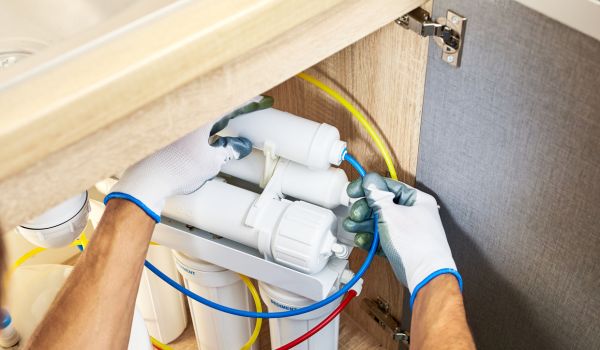
Once you know what is causing the cloudiness, treatment gets much easier.
| If your water… | Likely cause | Best next step |
|---|---|---|
| Clears after sitting | Air bubbles | Usually no filter needed; inspect pump or plumbing if it keeps happening |
| Leaves grit or particles in the glass | Sediment, sand, or silt | Use a sediment filter and inspect the well screen or casing if needed |
| Leaves orange, brown, or black staining | Iron or manganese | Test the water and choose a well-water system built for mineral removal |
| Looks cloudy and also smells odd or leaves slime | Iron bacteria, sulfur, or another contamination issue | Run a full well water test before choosing treatment |
👉 For mixed well water problems like sediment, iron, manganese, and odor, start here: best well water filtration systems.
💡 Good to know: If a filter is causing a noticeable pressure drop, it may be undersized for your home or loaded with sediment faster than expected. Here’s a closer look at how filters can affect water pressure.
🧪 Is Cloudy Well Water Dangerous?

Sometimes yes, sometimes no.
If the water only looks cloudy because of trapped air bubbles, it is usually harmless. But if the cloudiness comes from sediment, iron bacteria, casing failure, runoff, or other well problems, it can point to a bigger issue that should be checked.
That is why appearance alone is not enough. Cloudy water may be harmless, but it can also be the first sign that something in the well or plumbing system needs attention.
🧾 What the CDC Recommends
According to the CDC, private wells should be tested annually for:
- pH
- Total Dissolved Solids (TDS)
- Nitrates
- Coliform bacteria
If your water suddenly turns cloudy, that is a good reason to go beyond a routine annual check.
🧪 A Better Testing Option
We recommend starting with a well water test that checks for common mineral, sediment, and contamination issues so you can match treatment to the actual cause. Our full guide is here: water testing options for well owners.
💡 Pro tip: Cloudy water is often a symptom, not the full problem. Testing helps you avoid wasting money on the wrong fix.
🛠️ When to Filter — and When Not To

🚫 When You May Not Need a Filter
If the water clears quickly after sitting and there are no stains, grit, odor issues, or pressure problems, air bubbles are the most likely cause. In that case, filtration usually is not necessary.
⚠️ When Filtration Makes Sense
If testing shows sediment, iron, manganese, or other cloudiness-causing contaminants, filtration becomes much more than a cosmetic fix.
- It helps protect pipes and fixtures from grit and buildup
- It can reduce staining, metallic water, and cloudy appearance
- It helps protect appliances that do not handle sediment well
- It can improve water clarity without creating a major pressure penalty when properly sized
💡 Pro tip: Even when cloudy water is not dangerous, it can still be expensive if it shortens the life of plumbing fixtures, water heaters, or appliances.
🧠 Final Thoughts
Cloudy well water usually comes down to one of a few causes: air bubbles, sediment, minerals like iron or manganese, or a problem with the well system.
If the water clears after sitting, it is usually just air. If particles settle, staining shows up, or the problem keeps coming back, test the water and check the well before guessing on treatment.
Quick recap:
- Clears after sitting: usually air
- Settles or leaves grit: usually sediment
- Leaves orange, brown, or black staining: often iron or manganese
- Keeps happening: inspect the well and test the water
Clean, clear well water is usually fixable — but the right fix starts with knowing what is actually causing the cloudiness.