

✅ Quick answer: Reverse osmosis removes the broadest mix of dissolved contaminants from drinking water, but no filter removes everything. In our Cloud RO sample, lead, fluoride, copper, and regulated disinfection byproducts all came in below the lab’s reporting limits. Unsafe microbes, iron, sulfur, and hardness need different treatment.
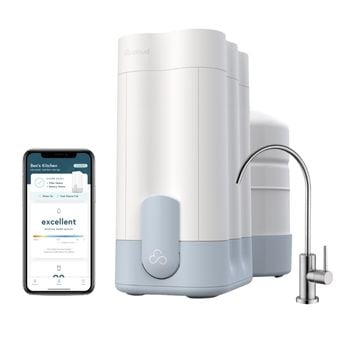
That makes RO the strongest all-around choice for drinking and cooking water when you don’t have one clearly defined problem. The right answer changes when you need to treat every faucet, disinfect well water, pull out iron, or just improve chlorine taste.
Our two practical picks
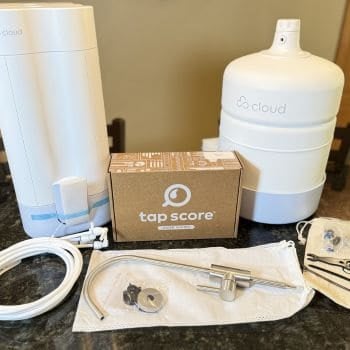
Best overall under-sink: Cloud RO
✓ QWL lab tested: 97/99 Tap ScoreCloud RO gave us broad contaminant reduction, strong mineral reduction, remineralized drinking water, and no need for an electrical outlet.
Best countertop: AquaTru Classic
✓ QWL tested for PFAS and microplasticsAquaTru is the easier fit for renters, or anyone who wants broad RO treatment without installing a system under the sink.
Want more choices? We’ve installed and lab tested five RO systems. Compare them in our reverse-osmosis system guide.
Which treatment removes what?

No treatment wins every category. Use this comparison to match the system to the problem you actually need to solve.
Swipe on mobile to compare each treatment.
| Treatment | Best at reducing | Not the right fix for |
|---|---|---|
| Reverse osmosis | Many dissolved salts, metals, fluoride, nitrate, and other contaminants covered by the exact system’s claims | Whole-home sediment, iron staining, sulfur odor, or untreated microbial contamination |
| Activated carbon | Chlorine, many tastes and odors, and certain organic chemicals covered by the filter’s claims | Hardness, most dissolved salts, nitrate, or reliable disinfection |
| UV disinfection | Bacteria, viruses, and other microbes when the unit is properly sized and the water is clear | Metals, hardness, chemicals, sediment, taste, or odor |
| Ultrafiltration | Fine particles and some microbes, depending on membrane pore size and certification | Dissolved salts, hardness, and many dissolved chemicals |
| Ion exchange | Hardness or selected charged contaminants, depending on the resin | Broad chemical removal, sediment, or disinfection |
| Oxidation and filtration | Iron, manganese, and hydrogen sulfide when sized for the incoming water | Broad drinking-water contaminant reduction |
| Sediment filtration | Sand, silt, rust, and other suspended particles | Dissolved contaminants, microbes, hardness, taste, or odor |
| Distillation | Many dissolved contaminants and microbes | Fast production, or volatile compounds without proper venting or extra treatment |
The product’s exact claim matters more than the treatment label. Two carbon filters, or two RO systems, can be certified for completely different contaminants. Check the model number, performance data sheet, and replacement schedule before you assume it handles your water.
🧪 What our Cloud RO lab test found
We pulled a treated-water sample from our Cloud RO and sent it to a certified third-party lab. It came back with a 97/99 Tap Score.
| Measurement | Untreated tap | Cloud RO |
|---|---|---|
| Total dissolved solids | 187 ppm | 66.2 ppm |
| Sodium | 46.30 ppm | 4.32 ppm |
| Chloride | 67.26 ppm | 10.70 ppm |
| Barium | 0.010 ppm | 0.0018 ppm |
| Lead, fluoride, and copper | Measured in source water | Below reporting limits |
| Regulated disinfection byproducts | Measured in source water | Below reporting limits |
✓ We tested this one ourselves – independent Tap Score results from our untreated municipal tap water and our Cloud RO treated water.
Those numbers are evidence from one system on one water supply, not a promise for every home. Incoming water, pressure, filter age, membrane condition, and maintenance can all change the result. You can review the complete Cloud RO laboratory report.
Bacteria and viruses need a different decision
A standard carbon filter or pitcher shouldn’t be used to make microbiologically unsafe water safe. If a private well tests positive for bacteria, or your utility issues a boil-water advisory, follow the public-health instructions first.
For ongoing well-water protection, that usually means properly sized UV disinfection or another validated purifier, once sediment is under control. The CDC recommends choosing a system certified for the specific germs or contaminants you need to address. Most residential RO systems are built for water that’s already microbiologically safe, unless the exact model says otherwise.
Start with testing before you buy equipment. Our well-water testing guide explains when a home strip is useful and when to send a sample to a lab.
What about hormones and pharmaceuticals?
Don’t buy a filter on a broad claim that it removes “hormones.” Look for the exact compound in a third-party certification or performance data sheet. NSF/ANSI 401 covers reduction claims for specific emerging contaminants, including some pharmaceuticals and estrone, but that certification doesn’t mean a filter removes every compound in the category.
AquaTru’s published performance sheet reports a 96.6% average reduction of estrone under the standard test conditions. Our own AquaTru lab panels covered PFAS and microplastics, not hormones, so we keep those two evidence sets separate.
Before you choose a system for an emerging contaminant, verify the exact model in the certifier’s database and read the full performance sheet. See the NSF overview of emerging contaminants and the AquaTru performance data sheet.
Choose the filter by the job
- Broad treatment at the kitchen sink: pick an RO system with claims that match your water. Cloud RO is our current under-sink pick.
- Broad treatment without plumbing: a countertop RO like AquaTru is easier for renters and small households.
- Mainly chlorine taste and odor: a certified carbon filter is often simpler and less wasteful than RO.
- Bacteria or viruses in well water: test first, then use validated disinfection sized for your water conditions.
- Iron, sulfur, or hardness at every tap: start with the well-water filtration guide, not a drinking-water RO system.
- A pitcher is the only format that fits: compare the models and lab results in our water-filter pitcher guide.
The bottom line
Reverse osmosis removes the broadest range of common dissolved drinking-water contaminants, which is why Cloud RO is our best overall answer for an under-sink system. AquaTru gives you similar treatment in a countertop format. Neither one replaces proper well-water testing, disinfection, or whole-house treatment for iron, sulfur, hardness, and heavy sediment.
Compare all five RO systems we lab tested