

No one wants to think their tap water might contain lead—but for millions of households, it’s a real possibility. And with growing concerns about old pipes and aging infrastructure, it’s natural to wonder: can a water softener help?
Not exactly.
Water softeners are great for handling minerals like calcium and magnesium. But lead plays by different rules. If you’re relying on softening systems to tackle heavy metals, you might be missing the mark.
Let’s break it down—what softeners can do, what they can’t, and what it really takes to protect your water from lead.
💡 Quick Takeaways
- 🚫 Water softeners don’t remove dissolved lead from water
- 💧 Lead filters, like reverse osmosis or KDF, are designed for that job
- 📊 Even trace amounts of lead can be dangerous—especially for kids
- 🔍 The only way to know what’s in your water is to test it
- 🏠 The best lead filter depends on your plumbing, budget, and lifestyle
🧠 Quick Background:
Lead is a heavy metal once used in plumbing, paint, and gasoline—before its health risks became widely known. Homes built before 1986 are more likely to have lead pipes, solder, or fixtures that can leach it into drinking water.
🚰 How This Contaminant Gets Into Your Water
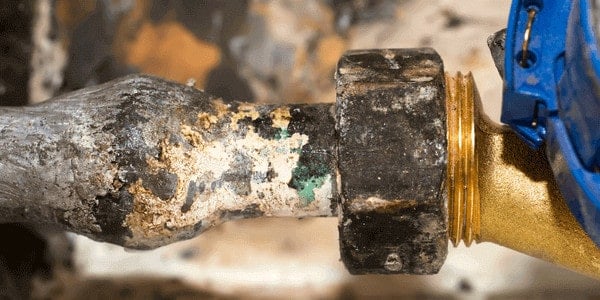
Most lead in drinking water doesn’t come from the treatment plant—it comes from the pipes it travels through.
Here’s where it usually sneaks in:
- 🏚️ Old service lines running underground from the street to your home
- 🚿 Indoor plumbing in homes built before the late 1980s
- 🔩 Fixtures and solder manufactured before 2014
Even newer homes aren’t always immune—low levels can still leach from faucets and fittings.
🔍 Related: These are the subtle signs your tap water might contain lead.
🧪 Is There a “Safe” Level?
Technically, the EPA sets the action level for lead at 15 parts per billion (ppb). But most health experts agree: there’s no truly safe level—especially for children.
This limit exists because it’s achievable for public water systems—not because it’s risk-free.
Until outdated pipes are replaced nationwide — it’s up to homeowners to take precautions.
🧫 How Do You Know If It’s in Your Water?

You can’t taste it. You can’t smell it. You won’t see it in your glass. The only way to know if your water contains lead is to test it.
Here’s how:
- 💧 For city water: utilities test the source—but the real risk is in your plumbing, after it leaves the plant.
- 🏡 For well water: annual testing is a must (and recommended by the CDC).
You can use test strips or mail-in kits, but lab-analyzed kits like Tap Score are a better bet when accuracy really matters.
🔎 See what lead might look like in water—and how to spot the signs
♨️ Can You Boil Lead Out of Water?
Nope—and it actually makes things worse.
Boiling water removes: bacteria and some chemicals — but it concentrates heavy metals like lead. As water evaporates, the contaminant stays behind.
Bottom line: Boiling does nothing to remove this type of toxin. Stick to certified filtration instead.
💧 Do Water Softeners Actually Remove Lead?
Not really.
Water softeners are designed to tackle hardness minerals like calcium and magnesium—not contaminants like lead. Some models might catch trace amounts of solid particles from corroded pipes, but they won’t remove dissolved metals, which is what you’re really dealing with in most homes.
So while softeners do a great job protecting your plumbing from scale, they’re not a substitute for a proper filtration system.
✅ If you’re concerned about toxins in your tap, check out filtration systems made specifically to reduce lead.
🧱 Whole-House vs. Point-of-Use Filters (Which Works Best?)

Both types of filters have their place—but when it comes to lead, the differences really matter. Here’s a quick side-by-side to help you choose what fits your home (and your plumbing).
🔍 Filter Comparison: Lead Protection
| 🚰 Filter Type | ✅ Pros | ⚠️ Cons |
|---|---|---|
| Whole-House | Treats all water Protects plumbing + appliances |
May not remove lead from indoor pipes More expensive to install |
| Point-of-Use | Targets drinking/cooking water Better at removing lead at the tap |
Only filters one faucet Requires extra units for multiple taps |
🛠 Pro Tip: Many homes benefit from using both—a whole-house system for broad protection, plus a dedicated filter under the kitchen sink for serious contaminant removal.
🧪 Which Filters Actually Remove This Contaminant?

Not every filtration system is designed to deal with heavy metals—but a few do it really well. Here’s a side-by-side look at how the top options compare when it comes to removing toxic particles like lead.
| 🔎 Filter Type | ✅ Strengths | ⚠️ Limitations |
|---|---|---|
| Activated Carbon | Reduces up to 90%+ of lead (if NSF certified) Also improves taste & odor |
Not all carbon filters are equal—cheap ones do very little |
| Reverse Osmosis (RO) | Removes up to 99% of dissolved contaminants Great for drinking/cooking water |
Slower flow rate Usually limited to one tap |
| KDF Media | Targets metals & chlorine Heat-resistant—ideal for showers |
Less effective than RO for lead Works best as part of a system |
🧠 Good to Know: The most effective lead protection often comes from combining methods—like pairing an RO unit with a carbon prefilter, or adding a point-of-use filter under your kitchen sink even if you have a whole-house system.
🧭 Choosing the Right Filter for Your Situation

There’s no one-size-fits-all solution when it comes to water filtration. The best system for your home depends on a few key factors:
- 💰 Budget: Reverse osmosis units and whole-house filters range in price, but any certified filter is better than none. If money’s tight, start with a point-of-use option for drinking water.
- 🏡 Your Home Setup: Own your home? A whole-house system may be worth the investment. Renting or planning to move? A countertop or under-sink filter is easier to install—and uninstall.
- 🔬 Your Water Quality: The higher the contamination level, the more filtration power you’ll need. If you haven’t tested your water yet, now’s the time.
- 🚿 Other Contaminants: Many filters target specific problems. For example, water softeners are great for hard water, but not metals. A reverse osmosis system combined with carbon is better for broad protection.
✅ The takeaway: Choose a filter that removes what you need gone—not just what sounds impressive on the box.
✅ Final Thoughts
Water softeners play a crucial role in protecting your pipes and appliances—but when it comes to harmful contaminants like lead, they’re not the solution.
If you’re serious about safer water, the answer lies in filtration—not softening.
- 🔎 Start with a water test.
- 💧 Choose a certified filter that fits your home.
- 🛠 Make the change—and protect your family with confidence.
 131 people found this helpful. Was this guide helpful to you?