


If you find mold in a whole-house water filter, the first step is to figure out whether the growth is limited to the cartridge or housing — or whether it points to a larger moisture, stagnation, or source-water problem.
That distinction matters. In many cases, a moldy cartridge should be replaced and the housing cleaned. But if mold keeps coming back, or shows up deeper in the system, the issue may be bigger than one dirty filter.
This guide covers what mold in a water filter usually means, what you should replace instead of clean, and how to keep the problem from coming back.
🧼 Quick Take: What to Do If You See Mold in a Water Filter
- Shut off the water and power to the system if needed
- Replace moldy cartridges instead of trying to reuse them
- Clean and disinfect the housing or removable parts
- Rinse thoroughly and let parts dry before reassembly
- Check for stagnant water, overdue maintenance, condensation, or source-water issues if it keeps coming back
🧠 Good to know: Tank-style systems are usually less likely to show visible mold than cartridge housings, but they are more involved to clean when growth does happen.
🦠 Mold vs. Mildew: What’s the Difference?
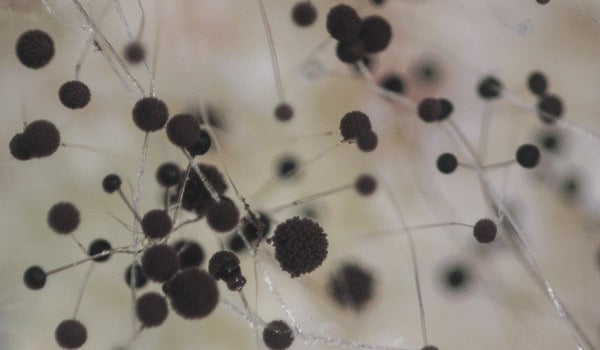
Mold and mildew get lumped together a lot, but they are not exactly the same thing.
- Mold is fungal growth that can show up in different colors, often black, green, or even pink, depending on conditions.
- Mildew usually refers to lighter, more surface-level fungal growth, often white or gray.
In water filter systems, either one usually means the same practical thing: moisture, organic buildup, or stagnant conditions are giving growth a place to hold on.
💡 Helpful Note: If water sits too long in part of the system — for example during low use, extended travel, or overdue filter changes — the chances of mold growth go up.
🧩 How Does Mold Get Into a Water Filter?

Mold spores are common in the environment, but they usually need the right conditions to grow inside a filter system.
- Overdue filter changes can leave trapped debris sitting too long inside the housing
- Stagnant water gives spores time and moisture to grow
- Organic cartridge materials can be more vulnerable than inert surfaces
- Condensation or external moisture can cause visible growth on the outside of housings
- Well or plumbing issues may allow contamination or persistent moisture into the system
🧠 Practical takeaway: If you see mold once, it may be a maintenance issue. If you keep seeing it, treat it like a system issue.
🚫 Do Water Filters Remove Mold?

Some systems can trap or neutralize mold spores, but that does not mean they prevent mold from growing inside the filter housing if conditions are right.
- Carbon filters: may trap some spores, but they are not a mold-management strategy by themselves
- KDF media: often used with carbon and can help reduce microbial growth inside certain systems
- UV systems: can neutralize microorganisms, but they do not physically remove debris or growth already sitting in a dirty housing
- Reverse osmosis: can reject very fine contaminants at the membrane, but that is not the same thing as keeping the rest of a filter system clean
💡 Good to Know: A filter that can remove spores from water is not automatically protected from internal growth caused by moisture, trapped debris, or long replacement intervals.
| 🧪 Filter Type | 🛡️ Mold Protection Level |
|---|---|
| 🧱 Standard Carbon Filter | May trap some spores, but not reliable for mold removal or internal growth prevention |
| ⚡ Carbon + KDF Media | Can help reduce microbial growth inside some filter systems |
| ☀️ UV Filter | Can neutralize spores, but does not clean a dirty housing or cartridge |
| 🚰 Reverse Osmosis | Fine membrane can reject spores at the point of use |
⚠️ Is Mold in a Water Filter Harmful?

Mold exposure affects people differently. Some people may notice no reaction. Others may be more sensitive, especially if they have allergies, asthma, or weakened immune systems.
- Allergenic molds may trigger sneezing, congestion, or mild respiratory irritation
- Pathogenic molds can be more concerning for people with weaker immune systems
- Dark or irritating growth should be handled carefully even if you do not know the exact type
🧤 Helpful Tip: If you are handling a moldy cartridge or cleaning a dirty housing, wear gloves and avoid breathing dried particles or dust.
🧼 What to Replace vs. What to Clean
This is usually the most important decision.
| Part | Replace It? | Clean It? |
|---|---|---|
| Cartridge filter | Yes, usually | No, not if mold is visible |
| Housing / canister | Only if damaged | Yes, usually |
| Tank media | Usually yes if contaminated | Tank can often be cleaned, media usually should not be reused |
| Pitcher body or removable plastic parts | No | Yes, if cleaned thoroughly and dried fully |
| Softener brine tank | Usually no | Often yes, following the manufacturer’s guidance |
📌 Simple rule: If mold is on the cartridge or filter media itself, replace it. If the growth is on the housing or a removable hard surface, clean and disinfect it before reinstalling new media.
🧼 How to Spot Where Mold Is Coming From

Where you see the growth tells you a lot.
- Outside of the housing: often points to condensation, damp air, or moisture outside the system
- Inside the cartridge or tank: usually points to stagnant conditions, overdue maintenance, or a deeper system issue
- Paper-style cartridges: more vulnerable because mold likes organic material
- Pitcher filters or small countertop systems: often a cleaning-frequency problem rather than a whole-plumbing problem
🧽 Pro Tip: Not every black speck is mold. Some filters shed carbon fines or collect dark residue that looks worse than it is. If the system also smells musty, feels slimy, or keeps growing visible spots after cleaning, take it more seriously.
💧 Think It’s the Water Source? Check These Next

- City water: rare, but worth reporting if a line break, odor, or obvious change happened recently
- Well water: inspect the well cap, casing, and surrounding conditions
- Plumbing: look for hidden leaks, damp spaces, and low-use sections where water sits too long
- Water test: if mold or microbial contamination is a recurring concern, test instead of guessing
💡 Keep in mind: If the same mold problem comes back after you replace the cartridge and clean the housing, the problem may be upstream from the filter itself.
🧽 How to Get Rid of Mold in Water Filters
🧱 Cartridge-Based Systems
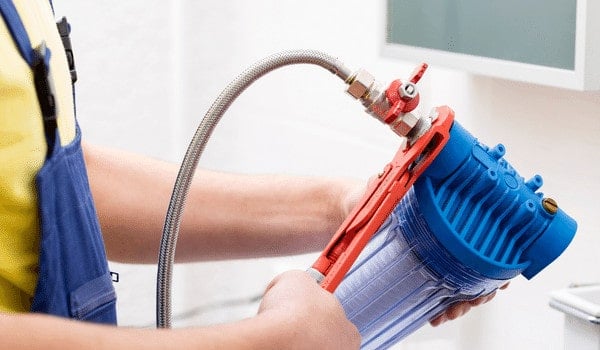
If mold is visible on the cartridge, replace the cartridge. Do not try to disinfect and reuse the filter media.
- Shut off the water and remove the old filter
- Mix a diluted bleach solution or use white vinegar as an alternative cleaner
- Scrub the inside of the housing with a soft brush
- Rinse thoroughly
- Let the housing dry fully before installing a new cartridge
🧠 Want a full walkthrough? Here’s how to change a whole-house water filter the right way.
💧 Pitcher-Style Filters
- Empty and rinse the pitcher
- Clean the body with a vinegar solution or warm soapy water
- Rinse thoroughly
- Let it dry fully before inserting a new cartridge
🛢️ Tank-Based Filters
These are more involved.
- Discard contaminated media
- Clean the tank and removable parts with an appropriate disinfecting solution
- Rinse thoroughly
- Let the tank dry as much as practical
- Refill with clean media appropriate for the system
🧂 What about water softeners? They are usually less mold-prone than standard cartridge systems, but stale water, long idle periods, or neglected components can still cause musty conditions. Check the manufacturer guidance before using bleach or system cleaners.
🔄 Recurring Mold Problems: Why It Keeps Coming Back

If mold keeps returning, there is usually a deeper reason.
- Stagnant or underused water gives growth time to return
- Overdue cartridge changes leave trapped debris and moisture in place too long
- Condensation or damp surroundings can cause repeat exterior growth
- Well, plumbing, or source-water issues may be feeding the problem from upstream
- Dirty housings or neglected service parts can reseed the new filter quickly
🧠 Long-Term Solutions for Mold Prevention
| 💡 Solution | How It Helps |
|---|---|
| Routine cartridge replacement | Reduces trapped debris and stagnant buildup |
| Housing cleaning at every change | Removes residue before it can reseed growth |
| UV treatment | Can help reduce microbial risk in the water stream |
| KDF with carbon in compatible systems | Can help limit internal microbial growth |
| Source-water inspection or testing | Helps rule out upstream contamination issues |
🧼 How to Prevent Mold in Water Filters

The best prevention is consistency.
🧃 If You Use Cartridge-Based Filters
- Replace cartridges on schedule
- Clean the housing at each filter change
- Store new cartridges in a dry, sealed place
- Avoid leaving the system idle for long periods if possible
🌀 If You Use a Backwashing System
- Make sure the system cycles as designed
- Avoid long idle periods if possible
- Use compatible media and service intervals for the application
🧪 Extra Tip: If you notice musty odor, slimy buildup, or repeat visible growth, do not just swap the cartridge and forget it. Check the housing, the maintenance schedule, and whether the system may be sitting too long between use cycles.
🧠 Final Thoughts
Mold in a whole-house water filter is usually a maintenance or moisture warning before it becomes a bigger system problem. In many cases, the right move is simple: replace the cartridge, clean the housing, and fix whatever condition let the growth happen in the first place.
If the same problem keeps coming back, stop treating it like a one-off dirty filter. At that point, it makes more sense to inspect the broader system, the water source, or your maintenance routine.
A clean filter should stay clean for a reason. If it doesn’t, that’s the part worth investigating.