

If your SpringWell SS1 isn’t softening your water, not regenerating, or the salt in the brine tank isn’t going down — there’s usually a simple fix. Most problems come down to one of five areas: incorrect settings, salt bridging, a drain or brine line issue, power loss, or flow direction mistakes during install.
This guide covers the most common SpringWell SS1 issues — and exactly how to troubleshoot each one. Whether your unit’s stuck mid-cycle, the water still feels hard, or you’re hearing unusual sounds during regeneration, here’s what to check (and how to fix it fast).
⚡ Quick Takeaways (If You’re in a Hurry):
- If your SS1 isn’t regenerating, check the flow meter cable and reset the time after power loss.
- Water still feels hard? Run a manual regen cycle and check your hardness settings.
- Salt not going down? You likely have a salt bridge — break it up with a broom handle.
- Drain line leaking? Inspect the fittings and check for kinks or clogs.
- For chlorine taste or smell, your system may need a filter upgrade — the SS1 doesn’t remove chlorine on its own.
🧠 Most SS1 issues are simple fixes. You don’t need to be a plumber — just know where to look.
🔄 Regeneration Problems
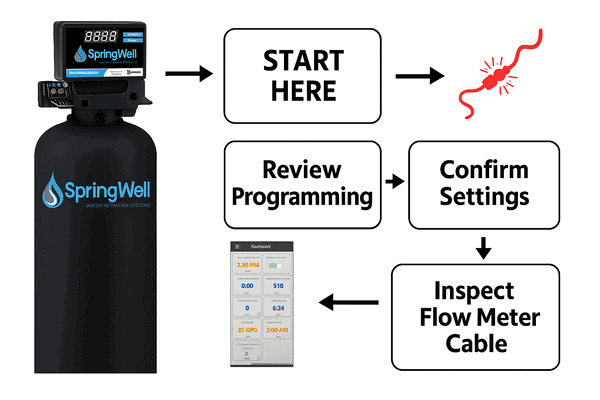
If your SpringWell SS1 isn’t regenerating on schedule, stuck mid-cycle, or doesn’t seem to be using any salt, the issue usually comes down to a programming error, a missed setting after power loss, or a disconnected flow meter cable. These are some of the most common (and fixable) issues with salt-based systems.
Below are the top regen-related failures and how to get your softener cycling normally again.
🕒 Not Regenerating on Schedule
The SS1 is a demand-based system, so if it’s not regenerating, check the timer settings first:
- Make sure the current time is accurate (AM/PM matters)
- Confirm the regen time is set to an off-peak hour (default is 2:00 AM)
- Check that the softener is set to Metered or On-Demand mode, not “Off” or “Time Clock”
Sometimes a power loss resets the settings without you realizing it.
🧠 Heads Up: If your system isn’t regenerating at all, it won’t draw brine, flush resin, or recharge — and you’ll start feeling hard water again in just a few days.
🔁 How to Force a Manual Regeneration
If your water feels off and you’re not sure when the last cycle ran:
- Press and hold the REGEN button on the control valve for ~5 seconds.
- You’ll hear the valve click and see the display change — it should begin a full backwash cycle.
- Let it run through all phases (backwash, brine draw, rinse).
Manual regeneration is especially useful right after installation or if settings were just changed.
💡 Pro Tip: If your salt level is high but the water still feels hard, trigger a manual regen, then retest your water hardness the next morning.
⚙️ Brine Cycle Doesn’t Run (Stalls Midway)
If the SS1 starts regenerating but never draws brine, or it stalls mid-cycle:
- Inspect the brine line to make sure it’s fully inserted and not kinked
- Check the flow meter cable — if it’s disconnected, the unit won’t know when to cycle
- Look for signs of a salt bridge, which can block brine uptake entirely
In rare cases, the control head piston may be stuck. Unplugging the unit for 30 seconds and re-running a regen cycle can often reset it.
📌 Good to Know: The SS1 uses a motorized piston valve to cycle through regeneration. If you hear the head clicking or humming repeatedly without advancing, the piston may be stuck or the motor could be misfiring. Try unplugging the unit for 30 seconds to reset it — if the problem continues, contact SpringWell for support or a potential replacement head.
🧱 Salt Bridge (Tank Looks Full, But Nothing’s Happening)
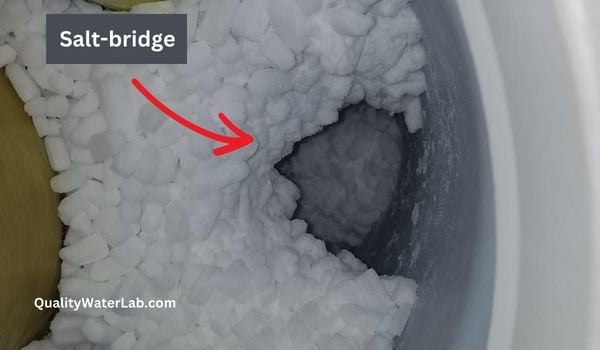
A salt bridge happens when the salt hardens into a crusty shelf above the water line, blocking the brine from forming below. Your tank might look full, but the softener is basically starving for salt.
How to check:
- Take the lid off the brine tank
- Press a broom handle or dowel straight down into the salt
- If it hits solid resistance but then breaks through suddenly — you’ve got a bridge
How to fix:
- Use the broom handle to break up the crust until the salt collapses into the water
- Add a gallon or two of warm water to help dissolve stubborn chunks
🧠 Expert Insight: Bridging is more common with pellet-style salt or if the tank sits in a humid basement. Switching to solar salt crystals and keeping the salt level just above the water line can help prevent it.
🧂 Not Drawing Brine During Regeneration
If the tank has salt and water but it’s not being drawn into the system:
- Check the brine line — make sure it’s fully connected and not kinked
- Inspect the air check valve inside the float assembly — it can clog over time
- Force a manual regeneration and watch to see if the water level in the brine tank drops
💡 Pro Tip: If the water level never drops during regen, but everything else looks normal, try removing and cleaning the brine line and valve. Even a small air leak or bit of debris can block suction.
🌊 Brine Tank Overflowing
If your brine tank is overfilling with water between cycles:
- The float valve may be stuck or misaligned
- There could be a restriction or backflow issue in the drain line
- The control head may be failing to shut off the refill stage
Fixes:
- Lift the float assembly to make sure it moves freely
- Remove and inspect the drain tubing for pinches, high spots, or debris
- Reset the unit and run a manual regen to flush out any internal errors
📌 Good to Know: SpringWell includes a safety float to prevent major overflow, but if your tank is constantly high or spilling, it’s a sign the valve isn’t closing fully — and it’s worth addressing before salt clogs your floor drain.
💧 Water Quality Concerns

If your water still feels hard, has a salty aftertaste, or hasn’t improved after a recent regeneration, your SS1 might be working incorrectly — or not at all. These issues often come down to system bypass, incorrect settings, resin exhaustion (rare), or post-softener contamination. Here’s how to pinpoint the cause and fix it.
🧼 Water Feels Hard Even After Regeneration
If your dishes still spot or your skin feels like you’re showering in untreated water:
- Double-check the system isn’t in bypass mode — it happens more often than you’d think
- Confirm the inlet and outlet lines weren’t reversed during install
- Make sure your hardness setting matches your actual water test results (most well water is 8–14 GPG, but it can be much higher)
- If you’ve had the system running for several years with no performance drop, it’s unlikely the resin is exhausted — but it’s not impossible
🧠 Expert Insight: One of the easiest ways to test real-world performance is to use a basic water hardness test strip at your kitchen sink. If you’re seeing more than 1 GPG after the softener, something’s not cycling right.
🧂 Salty Taste in Water
A salty or chemical taste in your tap water is almost always due to:
- The softener drawing in too much brine or not flushing it fully
- The drain restrictor being clogged or partially blocked
- Incomplete rinsing due to a skipped or aborted regen cycle
💡 Pro Tip: Trigger a manual regeneration and let the system finish a full rinse. If the salty taste goes away, it was likely stuck in a mid-cycle state or didn’t complete the prior flush.
🤢 Chlorine or Rotten Egg Smell Still Present
If your water smells like chlorine or sulfur after the softener, it’s important to remember that the SS1 is not a filtration system — it only exchanges hard minerals for sodium.
That means:
- Chlorine will remain unless you install a separate carbon filter (like the SpringWell CF1)
- Rotten egg smell (sulfur) usually comes from well water and requires an air-injection system or oxidizing filter (e.g., SpringWell WS1)
📌 Good to Know: Many homeowners assume their softener will handle chlorine or odors — but it doesn’t. Pairing your SS1 with a whole-house filter system is the best fix if you’re on chlorinated city water or have sulfur in your well.
⚙️ Mechanical & Pressure Issues
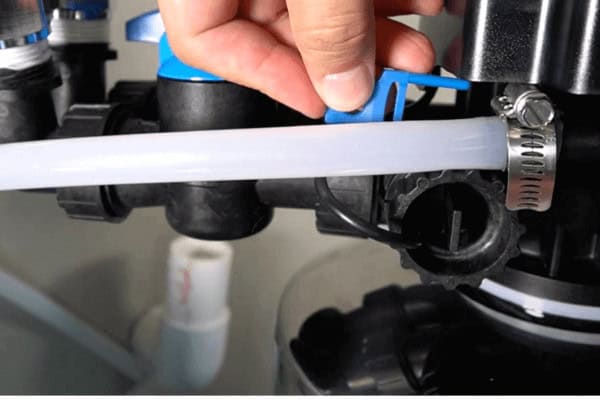
If your SpringWell softener suddenly drops water pressure, starts making weird noises, or leaks from the drain line, it usually means something’s out of alignment. It could be a clogged inlet, a kinked drain line, or a jammed piston in the valve head — all stuff that’s easy to miss but can cause big headaches.
Here’s what to look for when the system doesn’t feel like it’s running right — and how to get everything working again without ripping it out.
🔻 Low Water Pressure
Low pressure after installation or regeneration can make you wonder if the softener is the culprit:
- Check the Bypass: Ensure the system isn’t stuck in bypass mode.
- Inspect the Inlet/Outlet Setup: Make sure the connections aren’t reversed or partially clogged.
- Pre-Installation Filtration: Verify that a sediment filter is in place to prevent debris from affecting performance.
🧠 Expert Insight: Low pressure may not always be due to the softener. Test water pressure before the unit to isolate the problem. If the pressure is normal at the inlet, the issue may be inside the system’s plumbing setup.
🔧 Drain Line Leaks or Backing Up
If you’re seeing water pooling or hear an unexpected gurgle from your drain line, these steps can help:
- Secure the Connections: Make sure all clamps and fittings on the drain line are tight.
- Inspect the Tubing: Look for kinks, pinches, or blockages that could be restricting flow.
- Confirm Proper Routing: The drain line should slope continuously downward to avoid pooling.
💡 Pro Tip: If leaks persist after checking the obvious issues, consider replacing old or brittle tubing. A small crack can easily tank performance and cause drainage issues.
🔊 Unusual Mechanical Noises During Regeneration
A bit of hum is normal when the motorized piston engages, but grinding, knocking, or a high-pitched whine can indicate a problem:
- Listen for Consistency: A steady, even sound is typical; erratic noises suggest a mechanical jam.
- Check for Stuck Valves: Sometimes the bypass valve or internal piston might be jammed.
- Try a Reset: Unplugging the unit for 30 seconds and restarting the cycle can sometimes clear minor motor hiccups.
🤢 Smell Check: (For posts where off odors might accompany mechanical issues, add a note like “If a burning smell accompanies these noises, turn off the unit immediately and call SpringWell support.”)
📌 Good to Know: Persistent or disruptive noises may require professional diagnosis. Don’t ignore them; early attention can prevent more serious damage.
🔁 Resetting Your System
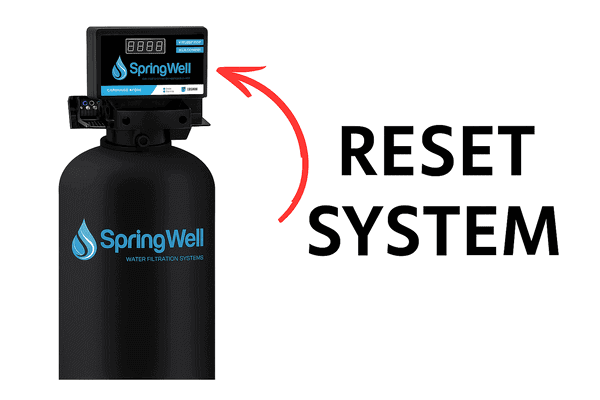
If your SS1 control head is glitching, not responding, or acting strange after a power outage, a reset is often all it takes to get it back on track. The system is designed to retain settings, but power interruptions, hard surges, or moisture near the plug can occasionally wipe the clock or trigger erratic behavior.
Here’s how to safely reset your system — and what to do if that doesn’t work.
🔌 How to Reset the Control Head
If the display is flashing, unresponsive, or stuck mid-cycle:
- Unplug the unit from the wall
- Wait 30 seconds
- Plug it back in and let the screen reboot fully
Once powered up:
- Re-check the clock (AM/PM matters)
- Re-confirm your hardness setting and regen time
- Run a manual regen to make sure everything cycles correctly
🧠 Expert Insight: If you forget to reset the clock after a power loss, the system may regenerate at the wrong time — or not at all. Always check the time setting after an outage.
🔄 What to Do After a Power Outage
Most SS1 heads retain settings unless the interruption was long or unstable. If you’re unsure what state the system is in:
- Run a manual regen just to be safe
- Listen for normal valve movement during each cycle stage
- Watch the brine tank afterward — it should draw water down during brine draw
💡 Pro Tip: Power surges can sometimes reset the head without cutting power. If you notice skipped regenerations after a storm, double-check your programming.
☎️ When to Call SpringWell Support
If you’ve:
- Reset the unit and the display still glitches
- Verified settings but water is still hard
- Noticed irregular noises or full cycle failures → It’s time to reach out.
SpringWell’s tech support is responsive and will often help you troubleshoot over the phone. In some cases, they’ll ship a replacement control head under warranty if the issue can’t be resolved.
📌 Good to Know: Make sure you have your order number and installation date handy — they’ll ask for both if you call for support or warranty help.
🔧 Final Steps If You’re Still Stuck
If you’ve made it through this list and your SS1 still isn’t behaving the way it should, don’t stress. Most issues come down to a skipped setting, minor clog, or brine tank hiccup — and almost everything can be fixed without tools.
📌 Good to Know: SpringWell’s tech support is responsive, and the control head is backed by a strong warranty. If you’ve ruled out the basics and still have issues, they’ll often walk you through diagnostics or send a replacement head if needed.
❓ Frequently Asked Questions

A few things can throw it off — most commonly, a power outage, incorrect clock setting, or low salt in the brine tank. Manually triggering a regen cycle can get things back on track, but double-check your programming too.
Press and hold the “Regen” button for 3 seconds. This will force the system to run a full cycle — handy after a reset or if your water isn’t softening as expected.
Clicking during regen is expected. But if it keeps clicking without progressing, the valve motor or piston might be stuck. Try a hard reset first. If that doesn’t help, contact SpringWell.
Sometimes it’s as simple as the hardness level being set too low. Other times, the resin inside the tank might be worn out or the system hasn’t regenerated when it should. Testing your water can help confirm whether it’s a setup issue or something mechanical behind the scenes.
Look at the control head — if it’s flashing “12:00 AM,” the system lost power and defaulted. You’ll need to reset the clock, confirm your settings, and likely trigger a manual regeneration to get back on schedule.
 128 people found this helpful. Was this guide helpful to you?