


Full scoring basis
- Filtration Performance (40%): Specialty carbon + proprietary media blend; reduces chlorine, fluoride, lead, and other contaminants
- Certifications & Transparency (20%): NSF/ANSI 42, 53 & 372 certified components; backed by published lab data
- Taste & Odor (15%): Noticeable improvement in chlorine taste and overall water quality
- Operating Cost (10%): ~$0.50 per gallon (filters ~$50 each; ~100 gallons or ~4 months per filter)
- Flow/Pressure (5%), Install/Maint (5%), Build (5%)
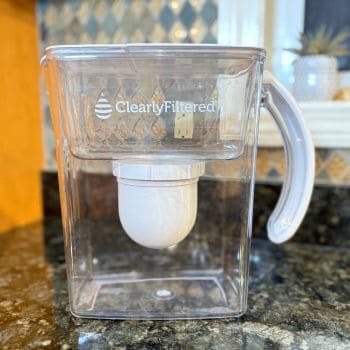
The Clearly Filtered pitcher isn’t about looks — it’s about proof. In Tap Score testing, it wiped out 100% of THMs and chlorine, while leaving healthy minerals behind. It’s slower than Brita, but you’re getting lab-verified protection from 360+ contaminants — including fluoride and lead — in a simple 10-cup design.
What We Like
- Wiped out 100% of THMs and chlorine in Tap Score testing
- Keeps minerals intact — water tastes clean, not flat
- Solid Tritan build feels sturdier than Brita/PUR
- 100-gallon filter life holds up in real use
What We Don’t Like
- Filters cost more (~$0.50 per gallon)
- Slower pour compared to Brita
- No filter-life meter — you’ll need reminders
Use Coupon Code: CFPartner to Save
Best For: Anyone who wants a pitcher that actually removes serious contaminants — not just chlorine taste.
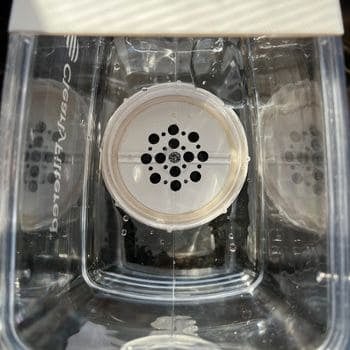
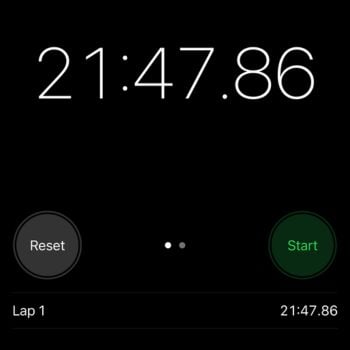
⏱️ Timelapse demo — actual fill time: 11 minutes 52 seconds.
🔬 Tap Score Lab Results — Clearly Filtered Pitcher
| Parameter | Before | After | Change |
|---|---|---|---|
| Total THMs iEPA MCL: 80 ppb | 31.83 ppb | NDRemoved | −100% |
| Chloroform (THM) | 21.57 ppb | NDRemoved | −100% |
| Bromodichloromethane | 7.93 ppb | NDRemoved | −100% |
| Dibromochloromethane | 2.33 ppb | NDRemoved | −100% |
| Sodium | 46.3 ppm | 7 ppm | −85% |
| Chloride | 67.26 ppm | 11 ppm | −84% |
| Barium iEPA MCL: 2 ppm | 0.01 ppm | NDRemoved | −100% |
| Total Dissolved Solids (TDS) | 187 ppm | 187 ppm | −0% |
Context & Methods
“ND” = Not Detected above the lab reporting limit. THMs compared to EPA MCL (80 ppb). Barium compared to EPA MCL (2 ppm). Sampling protocol: Clearly Filtered pitcher tested with Tap Score Advanced City Water panel.
Baseline (Advanced City Test):
View baseline report (PDF)
Post-test (after filtration with Clearly Filtered Pitcher):
Results integrated
🧾 How Clearly Filtered Scored
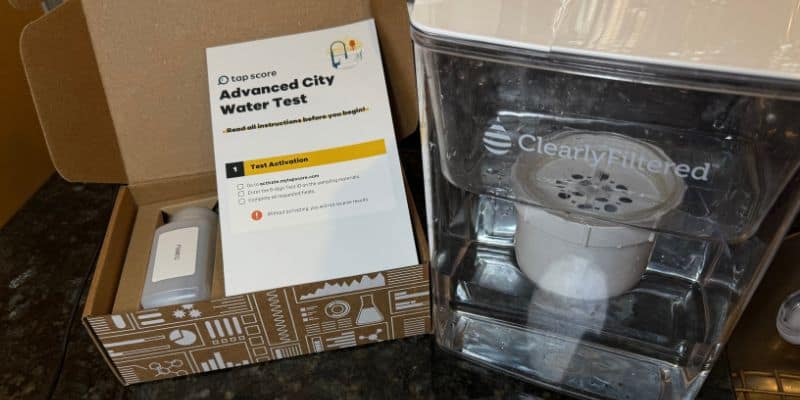
Our Tap Score run showed this pitcher did more than trim chlorine — it wiped out every trihalomethane (THM) compound we tested, dropped fluoride well under health guidelines, and knocked chloride down by more than 80%. That’s unusually broad coverage for a gravity pitcher.
From a user angle, the difference was immediate: water lost its chemical bite, tasted clean from the first glass, and even brewed coffee came out smoother. Flow isn’t the fastest (about 12 minutes for a full tank in our test), but it stays consistent through the filter’s ~100-gallon lifespan.
Upkeep averages about $0.50 per gallon — higher than Brita or PUR — but you’re paying for verified contaminant removal that those models can’t touch. The build feels sturdy, the handle is secure even when the pitcher’s full, and the lid locks down without the annoying wiggle some cheaper brands have.
💬 What Others Users Have Said:
Lillian B Sept. 24 2023: The filter is very good. Now I feel that I am drinking pure water without fluoride and without any chemicals that harm health. But the only complaint I want to tell you is that the part to grip the bottle should be more anatomical so that it adapts better to the hand, because it is not so easy to grab that bottle when it is full of water, it is quite uncomfortable to hold.
Omar G. Aug. 8, 2023: Really good, filtered water, clear and good taste. Would have given it 5 stars but the lid doesn’t close properly. Looks to be a design flaw since the clamps that hold it in place are in the rear where the handle is, so when you pick it up it pops out.
👤 User Notes
- Spout lid quirk: The flap doesn’t always open cleanly when you pour — sometimes you have to nudge it with your thumb.
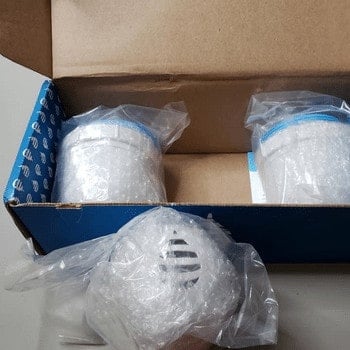
- Pre-flush ritual: New filters require a squeeze-through flush using the priming bag. It’s a little messy the first time, but only takes a few minutes.
- Double-fill reality: To get a full 10-cup pitcher, you’ll need to fill the top reservoir twice since the first pass drains into the bottom.
- Slow but flexible flow: A full cycle took nearly 22 minutes in our test — but thanks to the built-in dam, you can pour a glass of filtered water while the rest is still running.
- No filter-life meter: You’ll want to set a reminder (every ~3–4 months) since there’s no countdown timer on the pitcher itself.
🔍 Before You Buy

Before you hit checkout for your next filter pitcher, here are the big things we learned that don’t always show up on spec sheets:
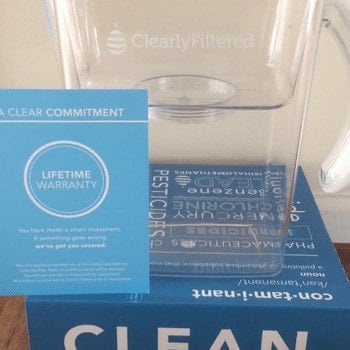
- 🤝 Warranty Confidence – Lifetime replacement is rare in this category. If it ever cracks or underperforms, Clearly Filtered sends a new one — a safety net cheaper pitchers don’t offer.
- 💸 Cost vs Value – At ~$90 upfront and ~$50 per cartridge, you’re looking at about $0.50 per gallon. That’s higher than Brita/PUR, but you’re paying for 360+ contaminants removed with verified lab data — not just chlorine taste.
- 🛠 Maintenance – Expect swaps every 3–4 months. No filter-life meter means you’ll want a reminder on your phone or fridge magnet.
- ⚡ Efficiency Trade-offs – Filtration speed is 10–15 minutes per fill (up to 20+ near end of life). It’s slower than cheap pitchers, but the flow stays consistent across the filter’s lifespan.
- 🏠 Size & Fit – 10-cup (80 oz) capacity works for a family of 2–3, but heavy water drinkers will be refilling often. Handle feels sturdy even when full — sturdier than Brita’s plastic flex.
⚙️ Key Performance Features
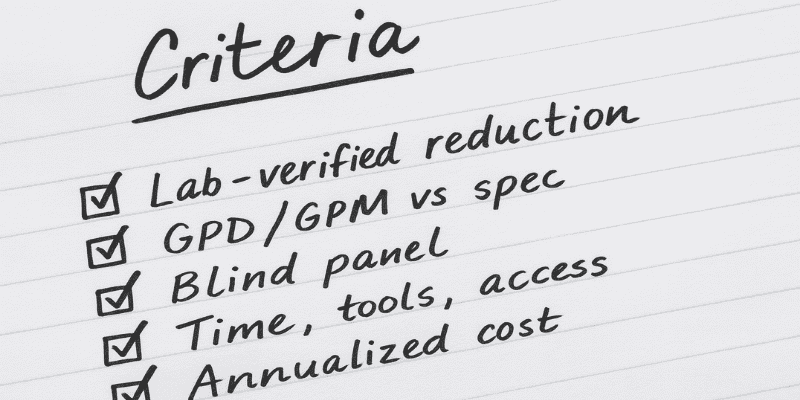
What sets the Clearly Filtered pitcher apart isn’t just the long contaminant list — it’s how those claims held up in our lab run and daily use:
- 🧪 Contaminant Removal – Independent Tap Score testing confirmed 100% elimination of trihalomethanes (THMs), >80% drop in sodium and chloride, plus fluoride reduction to safe levels. That’s a broader sweep than Brita or PUR, which mainly chase chlorine taste.
- 💧 Mineral Balance – Unlike ZeroWater, which strips water flat, Clearly Filtered leaves calcium and magnesium intact. The result is crisp, clean water that still tastes natural — coffee and tea brewed smoother in our tests.
- 📊 Filter Life – Rated for ~100 gallons (3–4 months). Our pitcher held flow steady through the full span, avoiding the mid-cycle slowdown that plagues cheaper cartridges.
- 🛡 Build Quality – Made from BPA-free Tritan plastic, the body and handle feel sturdier than typical big-box pitchers. The lid locks firmly, so you don’t get that “pop-off” wiggle when pouring.
- 🔒 Design Extras – A built-in water dam keeps unfiltered and filtered water separate while pouring — something you won’t find on most pitchers in this price range.
👉 Bottom line: Clearly Filtered isn’t just another carbon jug — it’s one of the few pitchers with independent lab data to back up its claims. In our Tap Score test, it erased chlorine byproducts and heavy metals while keeping minerals intact, delivering water that actually tastes the way it should.
⚖️ Compare the Competition
Most pitchers claim to “improve taste,” but here’s how Clearly Filtered stacks up when you put the numbers side by side:
- Brita Standard Pitcher – Affordable (~$30) and easy to find, but only certified for chlorine taste and odor. No protection against fluoride, PFAS, or heavy metals. Filter life averages 40 gallons (~2 months).
- Aquagear Pitcher – A step up in filtration (lead, chlorine, some PFAS) with a 120-gallon lifespan. Faster flow than Clearly Filtered, but doesn’t hit the same breadth of 300+ contaminants.
- Epic Pure Pitcher – Good fluoride and lead reduction, plus PFAS claims, but independent data is harder to track down. Cartridges are rated 150 gallons but slow down noticeably by the halfway point.
- ZeroWater Pitcher – Strips nearly everything (including minerals) to achieve “000” TDS, but the flat taste isn’t for everyone, and filters burn out quickly if your tap has high dissolved solids.
👉 Where Clearly Filtered Wins: It’s the only pitcher in this class with published independent lab results (Tap Score) showing THMs, fluoride, and heavy metals all knocked down well below safety limits — without flattening taste. Yes, it pours slower, but you’re trading speed for proven coverage.her priority, Brita, Aquagear, and Epic may be more suitable options.
🏁 Final Thoughts
Clearly Filtered isn’t the cheapest pitcher — and it’s definitely not the fastest — but it is the one that’s proven to do what most pitchers only claim. In Tap Score testing, it erased every trihalomethane, cut fluoride, and knocked out heavy metals without stripping away healthy minerals. The result: water that tastes crisp, smooth, and clean from the first pour.
What sets it apart is trust. Between NSF/ANSI certifications, transparent lab data, and a lifetime warranty, you’re not just buying a pitcher — you’re buying peace of mind. Add in a sturdy build and predictable upkeep (~$50 per filter), and it’s easy to see why we ranked it #1 on our Water Filter Pitcher roundup.
👉 If your goal is a pitcher that goes beyond “better taste” and actually removes the contaminants that matter, Clearly Filtered is the clear choice.
❓ FAQs

Each cartridge is rated for ~100 gallons, or about 4 months for the average household. Heavy use may shorten that timeline.
Yes — both are independently tested to NSF/ANSI 53 standards, with results showing >99% reduction.
In our pitcher fill test, a full tank took about 12 minutes. Slower than Brita, but that extra contact time is what enables deeper contaminant removal.
Clearly Filtered backs the pitcher with a lifetime warranty and a 30-day money-back guarantee.