
How to Increase Water Pressure from a Well: (Without Replacing Everything)

Mike Martin brings hands-on installation experience and helps validate the real-world setup and serviceability of the systems we cover.
✅ Quick Answer: To increase well-water pressure, first determine whether the problem affects one fixture or the whole house. Then check the pressure gauge, clogged filters, valves, pressure tank, switch, and pump capacity. Raising the switch setting only helps when the entire system can safely support it.
🔑 Key Findings
- Pressure and flow are different. PSI is the force in the system; GPM is the amount of water delivered over time.
- One weak fixture usually points downstream. Start with its aerator, showerhead, valve, or supply line.
- Pressure that falls during heavy demand often signals a flow restriction or capacity limit. A clogged whole-house filter is a common example.
- A larger pressure tank does not create higher pressure. It provides limited drawdown and reduces pump cycling.
- Do not turn up the pressure switch blindly. The pump, tank precharge, plumbing, fixtures, treatment equipment, and relief protection must work together.
What Is the Ideal Water Pressure for a Well System?
A pressure gauge near the tank shows what the well system is producing. Watch it while no water is running, while one fixture is open, and while several fixtures are open. The pattern is more useful than a single reading.
| What the pressure does | What it may mean |
|---|---|
| Gauge is normal, but one fixture is weak | Clogged aerator, showerhead, valve, or local supply line |
| Gauge is normal before the filter but flow is weak afterward | Clogged or undersized treatment equipment |
| Pressure starts strong and falls when several fixtures run | Demand exceeds the flow available through the pump, well, pipes, or filter |
| Pressure rises and falls rapidly | Pressure-tank, switch, or pump-cycling problem |
| Pump runs but pressure does not build | Leak, failing pump, low water level, blocked intake, or another well-system fault |
💡 Pressure versus flow: A gauge can show acceptable PSI while the shower still slows to a trickle. That happens when a restriction cannot pass enough GPM to meet demand.
How Does a Well Pressure System Work?

The well pump creates water pressure and sends water toward the house. The pressure tank holds a limited amount of water under pressure so the pump does not start every time someone opens a faucet. A pressure switch tells the pump when to start and stop.
When household demand exceeds what the system can deliver, pressure falls. The limiting point could be the well yield, pump capacity, pipe size, treatment equipment, or a partly closed valve.
Elevation matters too. Water pressure decreases by about 0.43 PSI for every vertical foot it rises. A second floor or a long uphill run may therefore need more pressure at the source than a nearby ground-floor fixture.
For a full system walkthrough, see how a private well, pump, switch, and pressure tank work together.
How Do I Fix Low Well-Water Pressure?
Start with the least expensive checks. Changing equipment before locating the restriction can leave you with the same weak shower and a much larger bill.
🚿 1. Check Whether It Is One Fixture or the Whole House
Run cold water at several fixtures. If only one is weak, remove and rinse its aerator or showerhead. Sediment and scale can clog the small openings without changing pressure elsewhere.
Use plain white vinegar for mineral buildup. Mixing vinegar with baking soda makes bubbles, but the two ingredients largely neutralize each other.
If both hot and cold water are weak throughout the home, move upstream to the main valves and well equipment.
🧃 2. Bypass the Filter or Water Softener
If the home has a whole-house filter or softener, use its bypass valve as a short diagnostic test. A noticeable improvement with the equipment bypassed places the restriction in that treatment stage.
Do not leave treatment bypassed when it protects the household from a known water-quality problem. The test is only meant to locate the pressure loss.
The key clue was that demand exposed the restriction. If flow starts strong and fades when another fixture opens, check the cartridge before blaming the well pump. Well-water sediment may require replacement sooner than the schedule printed on the filter packaging.
See why a whole-house filter may clog faster than expected.
🚰 3. Check Valves, Leaks, and Pipe Restrictions
- Main shutoff and bypass valves: Confirm they are fully open and not stuck between positions.
- Visible plumbing: Look for leaks, crushed flexible lines, corrosion, or a pressure-reducing valve that is failing.
- Older pipes: Internal corrosion or scale can narrow the opening and reduce flow.
- Recent work: A partly closed valve or debris introduced during a repair can cause a sudden change.
A softener can reduce future hardness scale, but it does not reliably clear years of existing buildup from undersized or restricted pipes.
🛢️ Pressure Tank: A Common Culprit Behind Low Water Pressure
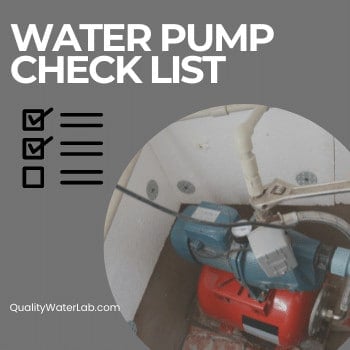
A pressure tank does not act like a large reservoir. Its main job is to maintain pressure between pump cycles and reduce how often the pump starts.
Watch the pressure gauge while water runs. Rapid cycling, a sharp pressure swing, or a momentary loss of water before the pump starts can indicate a waterlogged tank, damaged bladder, incorrect air precharge, or switch problem.
- Water at the air valve: This commonly indicates a ruptured bladder.
- Frequent pump starts: The tank may have lost usable drawdown.
- Rust, damp spots, or bulging: Stop and have the tank inspected rather than attempting a pressure adjustment.
Tank precharge is measured with the pump power off and the water side fully drained. It must match the pressure-switch setting. If those steps are unfamiliar, have a well professional test it.
⚙️ Check the Pressure Switch
The switch starts and stops the pump at preset pressures. Common configurations include 30/50 and 40/60 PSI, but the correct range is not universal.
Compare the gauge readings with the switch rating. A pump that starts late, fails to stop, or does not follow the expected range may have a clogged sensing port, faulty gauge, worn switch, wiring problem, or pump issue.
🔌 Inspect the Pump Controller
Some well systems use a separate control box; others have controls built into the pump. A tripped breaker, damaged capacitor, burned wiring, or failing controller can prevent the pump from reaching its normal output.
Do not assume the controller is bad because the house has weak flow. Confirm the valves, filters, gauge behavior, pressure tank, and switch operation first. Electrical diagnosis and replacement belong to someone qualified to work on the system.
🛠️ Plumbing System Issues
Pressure loss through plumbing becomes more noticeable as flow rises. Long runs, small-diameter pipe, excessive fittings, corrosion, and elevation can all reduce what reaches the fixture.
Compare pressure near the tank with pressure farther into the home while water is flowing. A large difference can help locate the restriction downstream of the well equipment.
💧 How to Increase Water Pressure from a Well
Once the cause is clear, choose the solution that addresses it. No single upgrade fixes every low-pressure problem.
| Solution | What it actually does | Best fit |
|---|---|---|
| Clean or replace a restriction | Restores flow lost through an aerator, cartridge, valve, or blocked pipe | Normal source pressure with poor downstream flow |
| Correct tank precharge or replace a failed tank | Restores proper drawdown and pump cycling | Rapid cycling or pressure swings |
| Adjust the pressure range | Raises pump start and stop pressures within system limits | A healthy system designed for the higher setting |
| Constant-pressure valve or variable-speed system | Reduces noticeable pressure swings as demand changes | Homes using several fixtures at once |
| Properly sized replacement pump | Matches flow and pressure to the well and household demand | Worn or undersized pump with adequate well yield |
| Intermediate storage and booster pump | Lets a low-yield well fill storage slowly, then supplies peak household demand | Low-yield wells that cannot meet peak GPM |
A larger pressure tank may provide a little more drawdown and reduce cycling, but it cannot permanently make up for a pump or well that supplies fewer gallons per minute than the household demands.
Likewise, a booster pump should not simply pull harder from a low-yield well. A properly designed storage system separates slow well recovery from peak household demand. See how well yield and recovery affect available water.
🛠️ Is Water Pressure Still Too Low?
Record the pressure-switch range, how quickly the gauge falls, which fixtures were running, and whether bypassing treatment changed the flow. Those details help a well professional distinguish a restriction from a tank, pump, or well-yield problem.
If pressure suddenly disappears, the pump runs without building pressure, or sediment appears after heavy use, switch off the pump and have the system inspected. Continuing to run a dry or malfunctioning pump can turn a water-supply problem into an equipment failure.
The Bottom Line
The fastest route to stronger well-water pressure is finding where the loss begins. Check individual fixtures first, then filters and valves, followed by the pressure tank, switch, controller, pump, and well yield.
If several fixtures expose the problem, do not assume the pressure setting is too low. The system may have adequate PSI but insufficient flow through a clogged cartridge or another restriction.