
Does the iSpring WGB32B Lower TDS?

Mike Martin brings hands-on installation experience and helps validate the real-world setup and serviceability of the systems we cover.
Last Updated on October 16, 2026
Answer
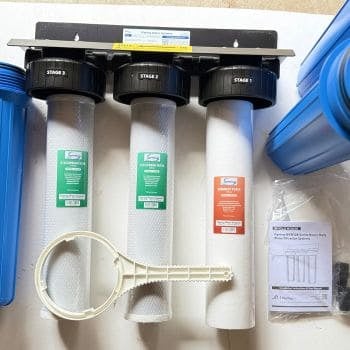
No. The base iSpring WGB32B uses a sediment cartridge and two carbon blocks, not an RO membrane. It leaves most dissolved minerals and salts in the water, so a TDS meter should barely move. Choose reverse osmosis if lowering TDS is your goal. Judge the WGB32B by the contaminants it targets, not by a TDS number.
What our lab showed: TDS measured 284 ppm before filtration and 295 ppm after the iSpring. Hardness moved from 47.1 to 45.3 ppm, while sodium stayed almost identical at 74.6 and 74.4 ppm. Lead fell from 8.57 ppb to below the lab’s 0.4 ppb reporting limit. Copper and zinc were also non-detect after filtration. The samples were collected several weeks apart, so we don’t treat the small TDS increase as a filtration effect. The useful lesson is that unchanged TDS can coexist with targeted contaminant reduction.