

Scoring basis
- Filtration (RO) (45%): 4-stage RO system with sediment + carbon + RO membrane + polishing. Independent PFAS lab test showed non-detect after treatment
- further lab panels in progress.
- Flow/Pressure (20%): Steady countertop RO delivery
- no plumbing required
- 3-quart reservoir suits daily cooking and drinking needs.
- Install/Maint (10%): Plug-and-play setup
- filter swaps in minutes
- annual operating cost about $100.
- Build (10%): Solid countertop unit
- NSF-certified parts
- BPA/BPS-free Tritan reservoirs.
- Taste (5%), Cost (5%), Certs (5%)
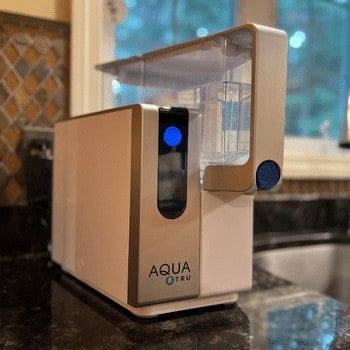
If you’re looking for a reverse osmosis system that doesn’t require any tools or plumbing skills, and can sit nicely on your countertop – AquaTru is right for you.
We tested this countertop reverse osmosis system and really loved how it performed.
Features
- Removes the most hazardous contaminants
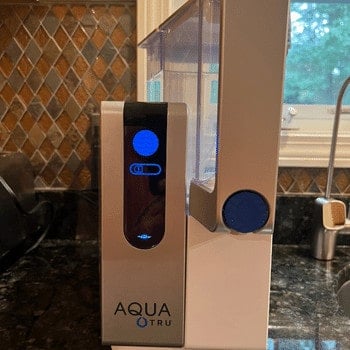
- Effortless set-up
- Minimal maintenance
- Quiet operation
- Affordable replacement filters
🧪 Independent Lab Testing
In addition to AquaTru’s published NSF/ANSI certifications, we partnered with Tap Score to verify real-world performance across three test panels: PFAS, Microplastics, and an Advanced City Water profile.
PFAS (Per- and Polyfluoroalkyl Substances) — ✅ Results Available
Tap Score Lab Results — AquaTru Classic Countertop RO (PFAS Panel)
| PFAS Analyte | Before (City Tap) | After AquaTru RO | Change |
|---|---|---|---|
| PFOA ⓘEPA Health Advisory: ~0 ppt (essentially zero) | Detected traceTap | Removed ND | −100% |
| PFOS | Detected traceTap | Removed ND | −100% |
| PFHxS | Detected traceTap | Removed ND | −100% |
| PFNA | Detected trace | Removed ND | −100% |
| Other PFAS (9 additional) | Detected trace | Removed ND | −100% |
“ND” = Not Detected above Tap Score reporting limits (0.00058–0.00099 µg/L depending on analyte). All 14 PFAS analytes in the panel were Not Detected after treatment.
Usage & test conditions: AquaTru Classic countertop RO in service for 3+ years. Filters and RO membrane replaced prior to sampling, followed by full system flush.
Pre-test (City Tap, baseline):
View baseline lab report
Post-test (AquaTru Classic, new filters):
View PFAS lab report
Microplastics — ⏳ Pending
Independent microplastics panel is currently in progress. Results expected Fall 2025. This section will be updated with full data tables once Tap Score releases the findings.
Advanced City Water Profile — ⏳ Pending
We’ve commissioned an expanded city water profile test (chlorine, metals, hardness, disinfection byproducts, etc.). Results are pending and will be added here upon completion.
🔑 AquaTru Classic: Key Takeaways
Most reverse osmosis systems can handle tough contaminants — but living with them is another story. Permanent installation, wasted water, and hours fiddling with plumbing make them impractical for many homes.
That’s what makes the AquaTru Classic different. We set it up on the counter in minutes, no tools required, and ran it through Tap Score’s lab testing. Results showed PFAS were reduced to non-detectable levels, with additional testing for microplastics and an advanced city water profile still in progress.
Day to day, it feels like a regular appliance. Cartridges pop in and out, and the water quality rivals what we’ve seen from far more complex under-sink systems.
✅ Pros
- 🧊 Chilled water option — the clean water tank lifts out and fits on a fridge shelf (not the door) if you want cold RO water.
- ⏱️ “Fill & Forget” routine — pour in tap water, walk away, and it quietly does its thing. Way less babysitting than a pitcher.
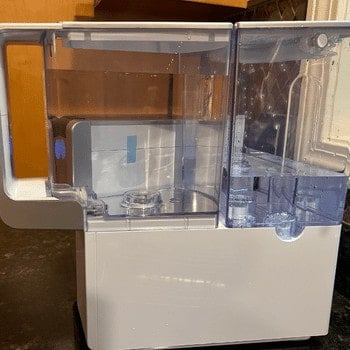
- 🚰 Tap side reality check — the concentrate tank gets noticeably cloudy over time, a blunt reminder of what you’re not drinking.
- 🔋 Digital filter alerts are handy — no guessing or sticky notes; it flashes when a cartridge is due.
- 🏠 No plumber, no holes — peace of mind that I didn’t need to drill or re-pipe anything.
- 👨👩👧 Guest-friendly — visitors just push the button; no “filter tutorial” required.
❌ Cons
- 🐢 Slow fill — if you’re topping off a big jug, you’ll stand there watching it drip for 10–15 minutes.
- 💦 Waste tank feels wasteful — seeing the reject water collect makes you want a second use for it (plants, cleaning, etc).
- 🫙 Only one clean tank included — would be nice if a spare jug came standard so you could keep one chilling.
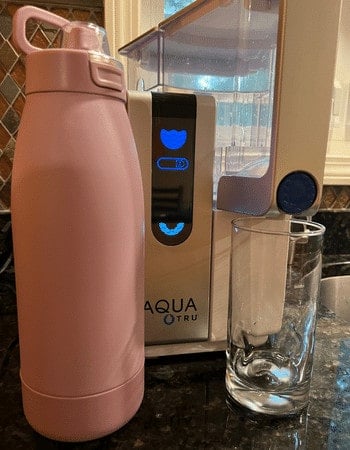
- 📏 Reservoir height — we wish the clean-water jug sat a bit higher; it’s awkward to fill tall pitchers or water jugs (see our demo photo).
⚖️ Compare The Competition Before You Buy

- Waterdrop Countertop Reverse Osmosis System: This system is more affordable than the AquaTru, and it has a higher water production rate. It also comes with an additional filter for better filtration of contaminants.
- SimPure Y7P-BW UV Countertop RO System: This system is little cheaper ($75) than AquaTru, but it has a higher water production rate 4:1 in a 4-stage system for better filtration of contaminants. It also includes a UV light to kill bacteria and viruses in the water.
- AlcaPure Reverse Osmosis Countertop Water Filter by RKIN: This system is more expensive than the AquaTru, but it has a sleek stylish look that can match most styles of kitchen decor. This is the only RO countertop system that has zero waste water in a 4-stage system that can remove harmful contaminants just as good as a traditional system would.
In our opinion, the AquaTru Countertop RO is the best option for those looking for a reliable and affordable countertop reverse osmosis system. However, depending on your needs, budget, and preferences, any of these other systems could be better suited to you.
⚡Performance Features
Owning the AquaTru Classic for over three years has given me a clear sense of how it really performs — not just what’s on the box.
What stands out:
- 🧪 Lab results: Tap Score confirmed PFAS down to non-detectable levels, plus reductions in chlorine byproducts and heavy metals.
- 👅 Taste: Post-filtration water is crisp, neutral, and smooth — even coffee and tea come out better.
- 🔄 Consistency: Day-to-day reliability is rock solid. As long as I swap filters on schedule, performance hasn’t dipped once.
- ⚡ Ease: Fill the back tank, press the button, and it produces steady purified water — no plumbing required.
💡 Good to know: It only ships with one clean water jug, and the jug doesn’t slide neatly into most fridges — it needs its own shelf space. Small trade-off compared to the hassle of under-sink installs.
💵 Cost of Ownership (3+ Years In)

- Stage 1 (Pre-filter): $33.95 × 3 = $101.85
- Stage 2 (Carbon): $33.95 × 3 = $101.85
- Stage 3 (RO/VOC membrane): $59.95 × 1 (replaced ~every 2 years) = $59.95
- Stage 4 (required – two versions):
- ◼️ Carbon Polishing Filter (~$42.95 × 3): $128.85
- 🌱 Mineral Alkaline VOC Filter (~$49.95 × 3): $149.85
Total filter spend (3 years):
- Standard Stage 4 = $393 (our test unit)
- Remineralization Stage 4 = $414
Average yearly cost: ≈ $131–138, depending on Stage 4 choice.
Cost per gallon: ~2 gal/day × 365 × 3 = 2,190 gal →
- Standard = ~$0.18/gal
- With remin = ~$0.19/gal 🌱 (only $21 more over 3 years — less than a penny per glass)
👉 Vs bottled water: At ~$3.80/gal, 730 gal/year would cost $2,774/year. Over 3 years, that’s $8,322 vs $393–$414 in AquaTru filters — nearly $8,000 in savings.
💡 Money-Saving Tip: AquaTru runs bundle sales and multi-pack deals that can cut costs by 10–15%.
📝 Long-Term Ownership Notes
- Stage 4 choice: Required filter, but you decide between a Carbon Polishing cartridge for neutral RO taste, or the Mineral Alkaline VOC cartridge for a spring-like profile with added calcium/magnesium.
- Performance: Lab-verified PFAS reduction to non-detect. Other contaminants (lead, chromium, fluoride, VOCs) consistently stay low when filters are changed on schedule.
- Ease of use: Cartridge swaps take minutes, with digital reminders that eliminate guesswork.
- Cleaning: Weekly soap-and-water rinse on tanks prevents film or spotting.
- Noise: Gentle pump hum while filtering — quieter than most countertop appliances.
- Daily rhythm: A full tank takes ~10–15 minutes. Plan ahead (fill after dinner, store in fridge overnight) and you’ll always have cold, clean water ready.
💦 Contaminants Filtered
Multi-stage filtration systems remove contaminants no single-stage filter can by working in tandem. The AquaTru is NSF-certified to reduce 83 substances — 15 times more than the average filtration pitcher.
AquaTru’s four stages remove:
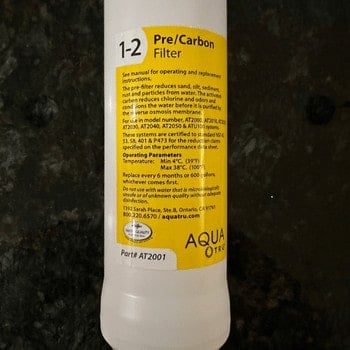
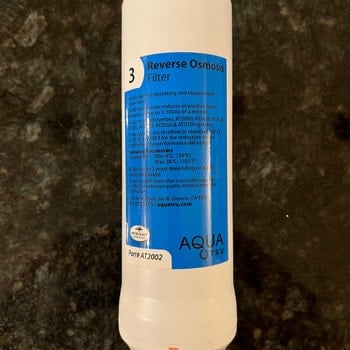
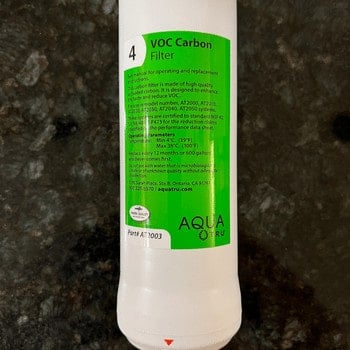
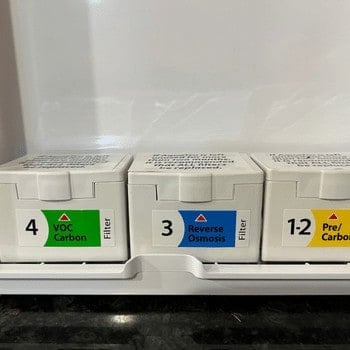
Stage 1: The Stage 1 sediment filter removes dirt and rust particles that are unappetizing to drink and can clog the RO membrane.
Stage 2: The Stage 2 activated carbon filter is specially designed to remove even the heaviest chlorine taste and odor.
Stage 3: The Stage 3 RO membrane does the hard work, virtually eliminating:
- Lead
- Chromium
- Arsenic
- Fluoride
- Uranium
- Nitrates and more
Stage 4: The Stage 4 filter removes organic compounds from rocket fuel to industrial solvents. Made of the finest-quality coconut carbon, it eliminates any residual taste impurities for the freshest-tasting water possible.
📝 Key Considerations
- Build quality holds up – After months of daily use, the plastic hasn’t yellowed or cracked. The buttons still click firmly, and the motor hasn’t lost strength.
- Noise level – It makes a soft hum while filtering, but you can still hold a conversation right next to it. Quieter than most countertop appliances.
- Counter space – About the footprint of a toaster oven. Manageable in small kitchens, but you’ll want to dedicate a spot since it needs to stay plugged in.
- Filter reminders – The digital change indicator is accurate and prevents guesswork. No “did I replace this last winter?” moments.
- Performance tip – It runs best if you keep the back tank filled daily; letting it run nearly empty tends to slow the filtering cycle.
- Customer support – AquaTru’s team responds quickly and stocks replacement parts, adding peace of mind for long-term ownership.
📌 First few cycles – The water tastes noticeably better after 2–3 full flushes. Don’t judge it on the first glass.
⚡ Capacity
The AquaTru Classic isn’t meant to replace your whole-house system — it’s built for drinking and cooking water. The clean tank holds about 3 quarts, which is fine for daily drinking but you’ll find yourself refilling if you’re cooking pasta, soups, or making coffee for a crowd.
- ⏳ Daily output: Can realistically produce up to ~48 gallons per day if you kept topping it off — way more than you’d ever need.
- 🥤 For households: Works great for 1–3 people without feeling limited. Bigger families will just refill more often.
- 💧 Wastewater: Like all RO systems, it produces about 3 parts waste for every 1 part filtered. We use ours for plants and cleaning to make the most of it.
💡 Good to know: A full tank takes ~10–15 minutes to process. If you plan ahead (fill it after dinner, store in the fridge overnight), you’ll always have cold, clean water ready.
🔬 Micron Rating
Reverse osmosis membranes are extremely tight: the AquaTru Classic’s RO stage is rated around 0.0001 microns. In practice, that’s small enough to reject PFAS molecules, most dissolved salts, heavy metals, and micro-organisms, which is why your TDS drops sharply and taste improves.
💡 Translation: if it’s dissolved and giving your water “taste” or long-term health concerns, RO is the tool that moves the needle.
🔄 Filter Maintenance
Cleanliness: give the tanks a quick soap-and-water rinse weekly; it prevents film and keeps taste neutral. 💡 Good to know: do 2–3 full flushes after any filter change; the taste smooths out noticeably.
Swap rhythm (typical):
- Sediment/Carbon ~6 months
- RO membrane ~24 months
- Final carbon/polish ~12–24 months
Reality check: the change-light has been accurate—no calendar guessing. When we follow it, performance stays steady.
Cost: ~$100/year in our usage (varies by water quality/volume).
🐢 Flow Rate
Like all RO, there’s reject water. We repurpose it for plants/cleaning so it doesn’t feel wasteful.
- Expect 10–15 minutes for a full clean tank. It’s not fast, but it’s predictable—fill it after dinner and you’ll have plenty cold by morning.
- Suits 1–3 people well; larger households can use it, but you’ll refill more often (or add a spare clean tank).
💡 Good to know: keeping the back tank topped up helps the cycle run more consistently.
🛠️ Design and Installation
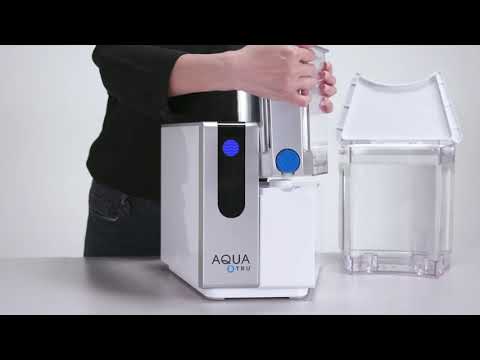
- Setup time: about 30–40 minutes including flush—truly plug-and-play.
- Footprint: roughly a toaster-oven worth of counter space; it needs an outlet.
- Noise: a soft hum during operation—conversation-level quiet.
- Jugs: ships with one clean tank; it doesn’t fit a fridge door but sits fine on a shelf.
- Care: tanks are hand-wash only (not dishwasher-safe).
💡 Tip: place the unit so the dispense spout overhangs the counter edge—it’s easier to fill bottles.
🧰 Help & Support
- Docs: setup and maintenance instructions are clear; the on-unit indicators reduce user error.
- Warranty: 1-year standard + 30-day money-back window.
- Support: responsive, with replacement parts and filters readily available.
❓FAQ
Q: Are cartridges easy to replace?
A: It’s easier than screwing in a light bulb.
Q: Does this filter remove fluoride?
A: It removes 93.5 percent of fluoride, reducing the content to the amount found naturally in most water supplies.
Q: What are the water reservoirs made of?
A: Both reservoirs are made of food-safe, shatter-resistant Tritan plastic.
✅ Final Verdict
If you want lab-level contaminant reduction without touching your plumbing, AquaTru Classic is the countertop RO that actually delivers. It’s slower than a faucet and takes some counter space, but the water quality, predictable upkeep, and plug-and-play install make it easy to live with—especially if PFAS and taste are your priorities.
Compare other countertop water filter brands
 109 people found this helpful. Was this guide helpful to you?